

Home & Decor Blogs: DIY, Interior Design & Lifestyle Ideas
Porcelain or Stone Pool Coping: Which One Holds Up and What It Costs
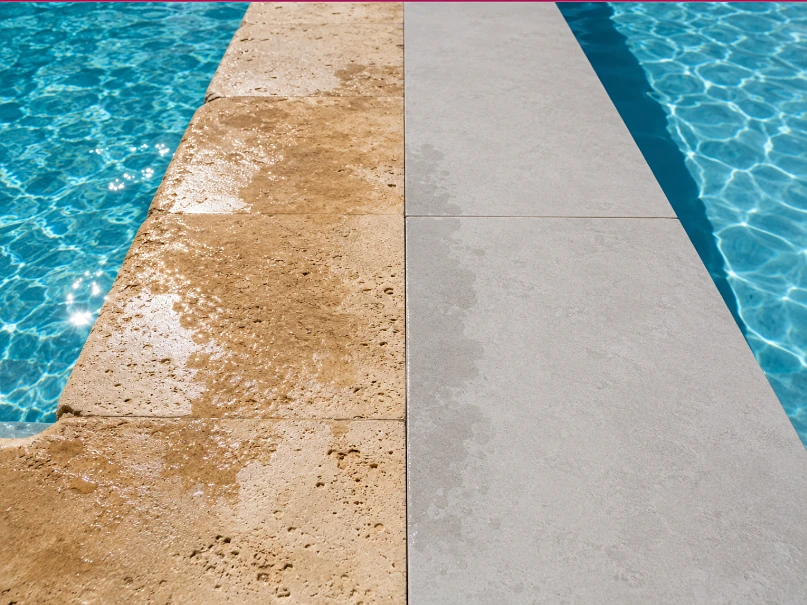
So you’re picking coping and one contractor swears by travertine, another only installs porcelain now, and quotes for the same pool run anywhere from four grand to twelve. The spread makes more sense once you know the split. Porcelain is the pick for saltwater pools and freezing winters, stone is the pick for easy repairs and cooler bare feet, and installed prices for both mostly land between $40 and $80 a linear foot. The rest is detail, but coping is one of those jobs where the detail decides year three.
Porcelain Shrugs Off Freezes and Salt, Stone Needs Sealing
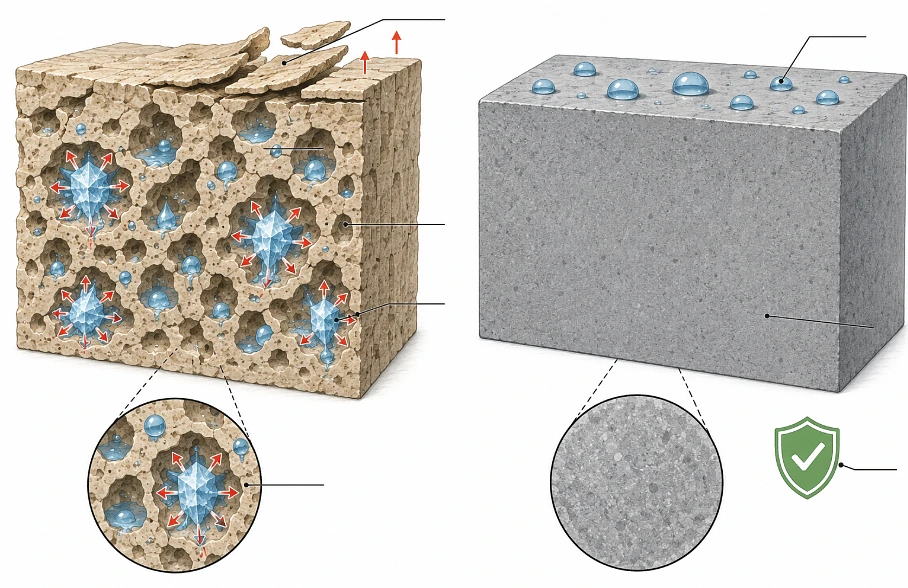
Porcelain absorbs under 0.5% of its weight in water. Travertine and limestone drink several times that, and the pool edge is the wettest spot in the whole yard. In a cold state that trapped water freezes, expands, and pops the stone surface off in thin flakes, which is why older stone coping goes chalky by its third spring. Saltwater is harder on stone again. Travertine and limestone are calcium carbonate, salt splash dries on the surface, crystals grow inside the pores and wedge the stone apart grain by grain, and the pitting shows up right at the splash zone within two or three seasons. Sealer slows both problems down and that is about all it does, it wears off at the waterline in a season or two and almost no one keeps up with resealing. Porcelain has no pores for any of this to happen in. If you run salt or get real winters, that settles the argument.
Stone Repairs Quietly, Porcelain Chips Loudly
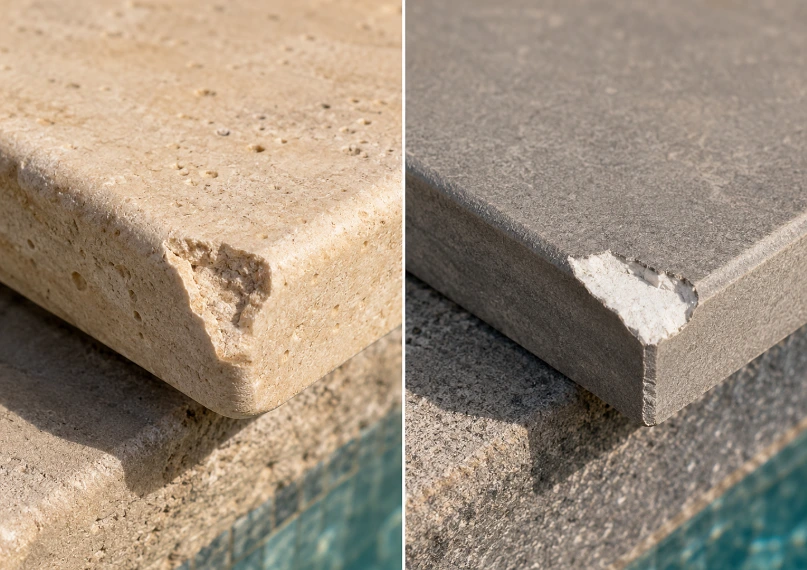
Then there’s the repair side, and it flips the whole thing. Stone is the same material top to bottom, so a chipped corner matches everything around it and a mason can hone the edge until you’d have to hunt for the damage. Porcelain coping is usually a 20 mm slab where the pattern sits only on the surface, a chip exposes a lighter core that keeps catching your eye until the piece gets swapped, and swapping means hoping the maker still produces that line. Stone also wins on comfort if you pick light colors. Tumbled travertine stays walkable in full sun while dark granite can pass 140°F, and if you’re browsing pool coping ideas for a traditional pool, that cool underfoot feel is a big part of why travertine keeps showing up.
Matching the Coping to the Deck Makes a Small Yard Read Bigger
Run the same material from the waterline through the rest of the patio and the eye stops seeing two zones, it sees one surface, and a tight backyard feels noticeably larger for it. Contrast works too, light coping against darker pavers gives swimmers a visible edge line, useful with kids around. Just decide before ordering, because stone bought a year later to match rarely matches.
What Pool Coping Costs
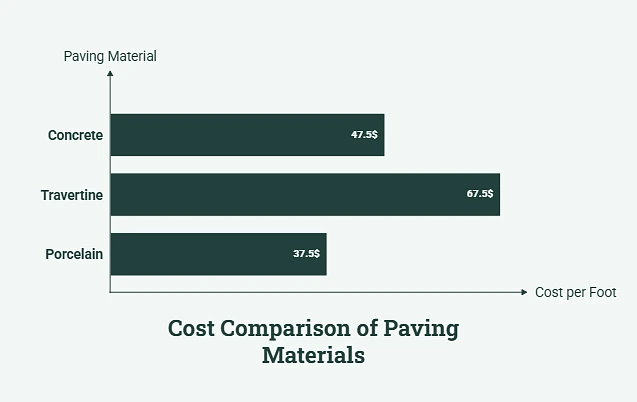
Installed, most jobs land between $40 and $80 per linear foot, and a typical pool carries 70 to 90 feet of edge, so full projects usually total $3,000 to $8,000. Rough splits by material:
- Concrete runs $40 to $55 a foot installed, the budget path.
- Travertine runs $55 to $80 installed, top of the stone range.
- Porcelain material runs $25 to $50 a foot, with labor adding $10 to $30 on top.
- Replacing old coping costs more than new work because demolition and disposal ride along, so ask for that as its own line item.
- Stone adds sealing at $1 to $3 a foot every two or three years, porcelain adds nothing.
One warning on quotes. Half the cheap ones are pricing material only, so a number that looks like a bargain next to an installed quote usually is not the same job.
The Install Decides Whether Any of It Lasts
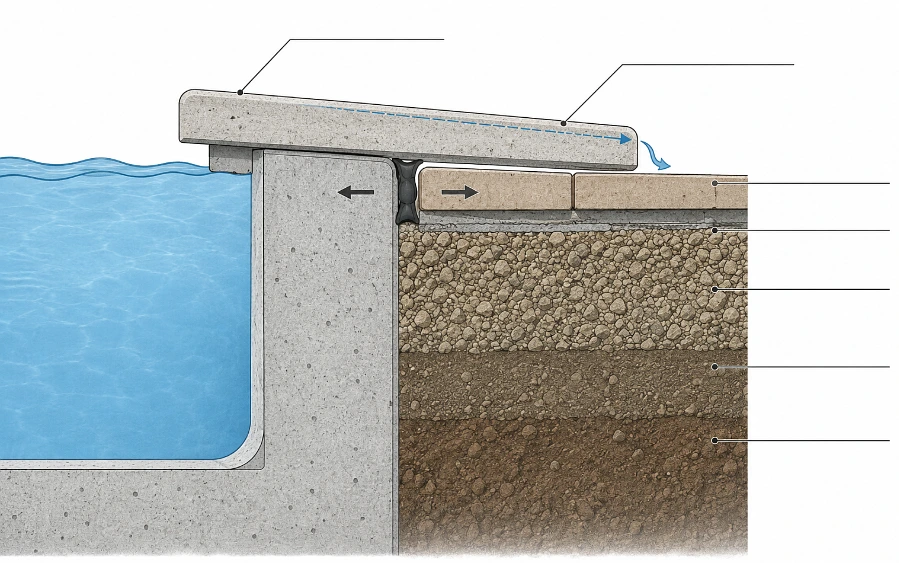
Whichever material wins, two details on the quote matter more than the stone itself. The joint where coping meets the pool shell has to be flexible mastic, never rigid grout, because the deck and the shell move separately and something has to absorb that. And the coping needs a slight pitch away from the water so runoff drains into the yard instead of behind the shell. There’s a thirty second check for any existing pool, rap the coping with a knuckle in spring and a hollow sound means the bond is already letting go.
Plenty of crews skip both details and the coping still looks perfect at handover. It stays perfect for about two winters, which is usually one winter longer than the warranty.

 Decor & Improvement Accessories