

Home & Decor Blogs: DIY, Interior Design & Lifestyle Ideas
Do Normal People Really Buy From Art Galleries? Brisbane’s Newest One Says Yes

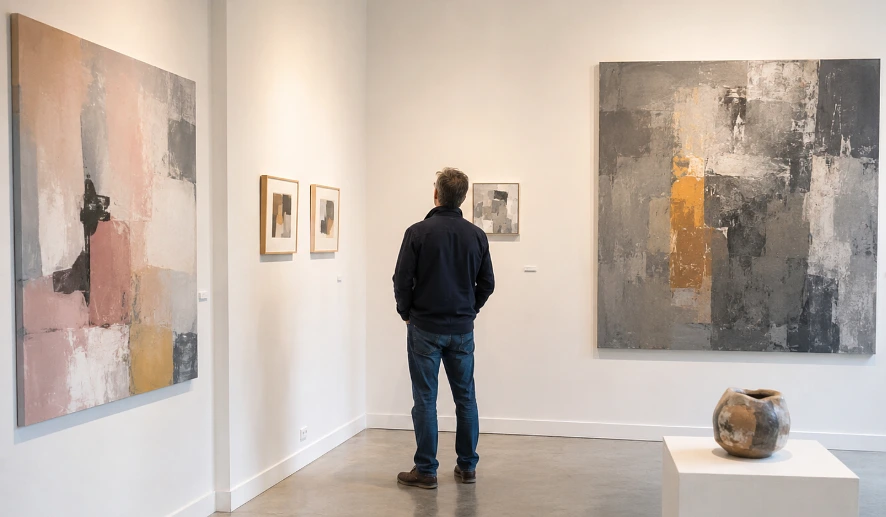
Do you think only rich people and serious collectors walk out of art galleries with something wrapped under their arm? No. Ordinary people are buying art every week, and the internet keeps catching them in the act.
In May this year, No Name Gallery in Philadelphia shared a story on its blog. A technician was in the gallery fixing the internet, and while he was working he looked up at a painting priced at $9,000 and asked the owner why art costs so much. The owner walked him over to another wall, where a piece was marked at $100.
“WOW I could afford that!”
He is a working man on a job call, and he is discovering in one sentence that the velvet rope he always imagined was never hung there in the first place. That same discovery is now waiting in Brisbane, because the city has a new gallery at the Queen’s Wharf precinct, and the people who are walking out of places like it are not the people you are imagining.
The Internet Is Full of Buyers Like Him

You can spend an evening reading what people are posting after their first art purchase, and you will see the same pattern appearing again and again.
A woman in Utah wrote about a museum’s yearly Christmas show where artists sell small works for $100 each. She and her husband bought two, carried them home to a tiny first house, and had them hanging on the wall the same day.
“We were intoxicated by the thrill of having art! From an actual artist! On our wall!”
A couple on holiday in California posted their story on a forum after they wandered into a local guild gallery and stopped in front of a large canvas titled Thea. They could already picture it above their own fireplace, so they phoned the artist, got the painting shipped across the country, and wrote about the whole thing with the excitement of people describing a new baby.
On another thread, a collector explains that he is hunting signed, numbered prints at art auctions in the $50 range, and that his plan is a house where original work keeps rotating on the walls.
These are not wealthy people. Each of them now owns a thing which no chain store is ever going to print again.
And do you know who else is buying from her phone like the rest of us? Bobbi Brown, the woman who built the famous makeup company, has written on her own newsletter about the art she keeps buying straight off Instagram. She collects prints from a German painter named David Pher, she took a leap on one of his large originals, and she says it is bringing her joy every time she walks past it. Her only complaint is that she is running out of wall space. The habit is the same from the top of the money ladder to the bottom, and only the size of the wall differs.
A Gallery Holds Far More Than the Big Painting in the Window
The painting in the window is priced to draw attention, and it is usually the most expensive thing in the room. The practical inventory is sitting quietly behind it.
Works on paper, small canvases, limited edition prints, and sculpture are all part of what a commercial gallery carries, and the lower end of that range sits in the low hundreds. People are spending that much on a floor lamp without thinking twice about it.
The prices will be told to you plainly if you ask for them. Asking is allowed, browsing is free, and neither of the two puts you under any obligation.
Some of It Is Older Than Any Antique You Could Ever Buy
An Australian gallery is offering something here which a European or an American one cannot offer.
Aboriginal art carries the oldest continuous visual tradition on earth, and the Brisbane gallery at Queen’s Wharf hangs work connected to names which sit in national institutions, Emily Kngwarreye and Gloria Petyarre among them. The major canvases command serious money, and they deserve to.
The entry point is smaller than people expect. Works on paper and modest community pieces let an ordinary home hold a thread of that tradition, and that thread is tens of thousands of years long.
A word of caution is needed here, and it should be said plainly. Indigenous work should be bought through galleries which document the artist and the payment, because proper provenance protects the painter before it protects the buyer, and a gallery which is doing this properly will have the paperwork shown to you without any pushing.
You Can Rent the Painting First, and You Can Even Swap It Later
The thing that stops a first-time buyer is rarely the price tag. The real worry is commitment, the fear of spending good money and then hating the piece above the sofa by winter.
Two arrangements exist for exactly this worry, and both are sitting on the Brisbane gallery’s own pages.
The first is a six-month exchange guarantee. You buy a piece, you live with it, and if the two of you fall out, you can have it exchanged within six months for full purchase-price credit toward another work.
The second is an art rental program, which private buyers can use as well as offices. A painting can hang in your living room on rent while you are still making up your mind, and most households have simply never heard that the option exists.
The Chain-Store Print, Measured Against the Real Thing

You can run the numbers the way a normal buyer runs them.
A mass-produced print from a homewares chain is costing you somewhere around $300 to $400 once you have had it framed properly. It looks fine on day one, and within a month your eyes are sliding past it the way they slide past the light switch.
Do you know what one buyer did after her family finished building a new house? She gathered every poster and every piece of mass-produced art in the place and carried the whole lot to the resale shop, and she is now filling the bare walls slowly, one painting she loves at a time.
An original at the bottom of a gallery’s range starts in the same territory as that framed print. The difference is that a person made it, and the surface still carries the marks of the decisions that were being made in the paint.
Buy it for the wall and not for the portfolio. If the value rises one day, you may treat that as a bonus, and if it never rises, you are still holding the only copy in existence.
Walk in Like It Is a Shop, Because It Is One
The new Brisbane art gallery at Queen’s Wharf is the first gallery which its Sydney parent has opened outside its home city in thirty years of trading, and it is sitting at 100 George Street with ordinary public opening hours.
There is no dress code and there is no entry test. You walk in, you look around, you ask what things cost, and you leave whenever you like.
Somewhere on those walls, a piece is waiting at a price that will pull the same four words out of you that the technician in Philadelphia said. He went inside, and that was the entire qualification.
 Decor & Improvement Accessories