

Home & Decor Blogs: DIY, Interior Design & Lifestyle Ideas
How Balcony Waterproofing Failure Actually Progresses in Sydney Homes

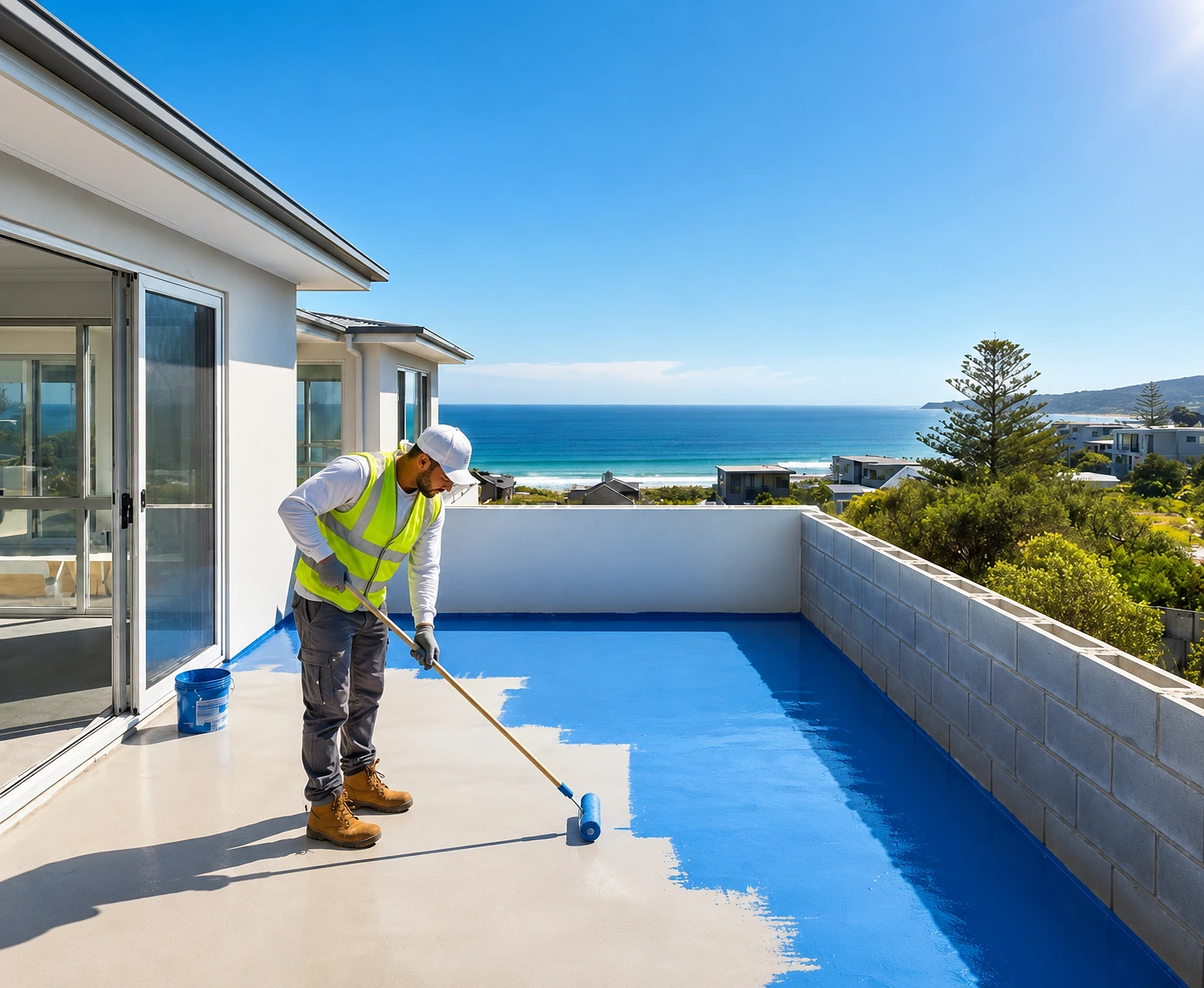
A failed balcony membrane doesn’t announce itself. It works quietly for years, letting water through hairline cracks and worn edges and failed sealant joints, and by the time the ceiling below shows a damp patch, the balcony above has already moved through three or four stages of damage that no one caught.
This is the pattern strata committees and owners across Sydney deal with constantly. Every apartment block within a few kilometres of the coast has this problem waiting somewhere in its capital works plan. The whole game is figuring out where a balcony sits on the progression, because catching it early is the difference between a few thousand dollars and a special levy.
The Signs Everyone Walks Past
The earliest warnings look like nothing. White powdery stuff on the tile surface. Faint rust colour bleeding out from under a balustrade fixing. A grout joint that has started to crumble in one corner.
Not a single person calls a builder for that. That’s the problem.
The white deposits are salts. Water is moving through the concrete and the grout, picking up mineral content on its way, and depositing it on the surface where it dries out and crystallises. Any amount of this on a balcony that’s supposed to be waterproof means the membrane underneath is no longer doing its job. The rust staining is worse. That colour is coming from steel reinforcement inside the slab, and if the surface is telling you there’s rust down there, the damage has already started well before you noticed.
Repair at this stage is genuinely cheap by Sydney standards. A localised strip and reseal of the affected section, maybe some minor concrete work if the rust has just started, sits somewhere between $2,000 and $5,000 for most single balcony jobs. Which is nothing compared to what stage two costs.
When the Steel Starts Rusting
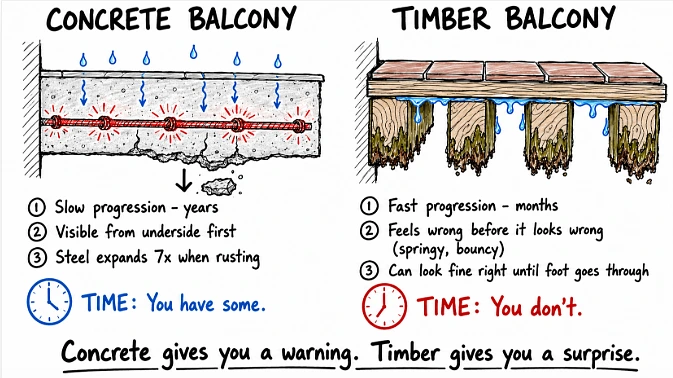
Concrete looks solid. It isn’t. Water moves through it slowly, and in a coastal city like Sydney, that water carries chlorides from the salt air with it. Chlorides break down the layer that normally keeps steel reinforcement from corroding. Once the steel starts rusting, it expands. It can expand to around seven times its original volume as it corrodes, and it does this from the inside of the slab, so the concrete around it cracks outward.
That’s concrete cancer. It’s the single most expensive failure mode in Sydney balcony work, and it’s the one no one sees coming because the surface can look fine for years while the reinforcement inside is being eaten alive.
Mark Joseph, Managing Director of Mjengineeringprojects – balcony waterproofing Sydney, puts it plainly. Once you see the concrete flaking, once there’s spalling on the underside or at the edge, you’re not in repair territory anymore. You’re in remediation territory, and the two cost very different amounts of money.
At that point the job isn’t just the membrane. You’ve got to break out the damaged concrete around the affected reinforcement, treat or replace the steel where the cross-section loss is significant, reinstate the concrete with a compatible repair mortar, put down a whole new membrane system across the entire balcony (not just the damaged section, because the rest is on borrowed time), and then finish with protective coatings to slow the process down for the next decade or so.
Typical Sydney strata concrete cancer balcony repair lands between $5,000 and $15,000 per balcony. Serious cases with widespread damage push into the $30,000 range or beyond. The variable that catches strata committees off guard is access. Scaffolding for a multi-storey elevation is $15,000 or more before anyone picks up a trowel, which is why the honest advice most engineers give an owners corporation is to do every affected balcony on that elevation at once, not one at a time. The scaffold is up. You may as well use it.
Timber Balconies Fail Differently, and Faster
Not every Sydney balcony is a concrete slab. Federation homes, timber terraces, boutique older developments, plenty of the housing stock in the Inner West and the Eastern Suburbs has balconies built on timber joists with a screed and tile finish over ply, or with timber decking directly on bearers.
Water in a timber system doesn’t act the same way it does in concrete. Concrete gives you time. Timber doesn’t. Once moisture is trapped against timber under a failed membrane, dry rot and fungal decay start attacking the structural strength of the framing, and the surface can look perfectly fine right up until the moment someone puts a foot through it.
The signs are different too. A timber balcony that’s starting to fail feels wrong before it looks wrong:
- Springy or bouncy when you walk on it, especially near the outer edge
- A damp, musty smell in the room below that doesn’t go away when you air the place out
- Ceiling staining under the balcony that spreads slowly instead of appearing as a defined damp patch
- Small fruiting bodies (little mushroom things) at joist ends, which most people never see because they never look underneath
Fixing a timber balcony properly is invasive. You’re stripping the entire finish, pulling up the deck or the ply, cutting out affected joists and bearers, and rebuilding from the structural framing up. Because so much has to come off anyway, the cost gap between a “small” timber repair and a full rebuild is much narrower than in concrete work. Often the sensible engineering call is to just do the whole thing rather than repair one section that’ll be surrounded by more failure within three years.
Why Tiling Over the Top Never Works
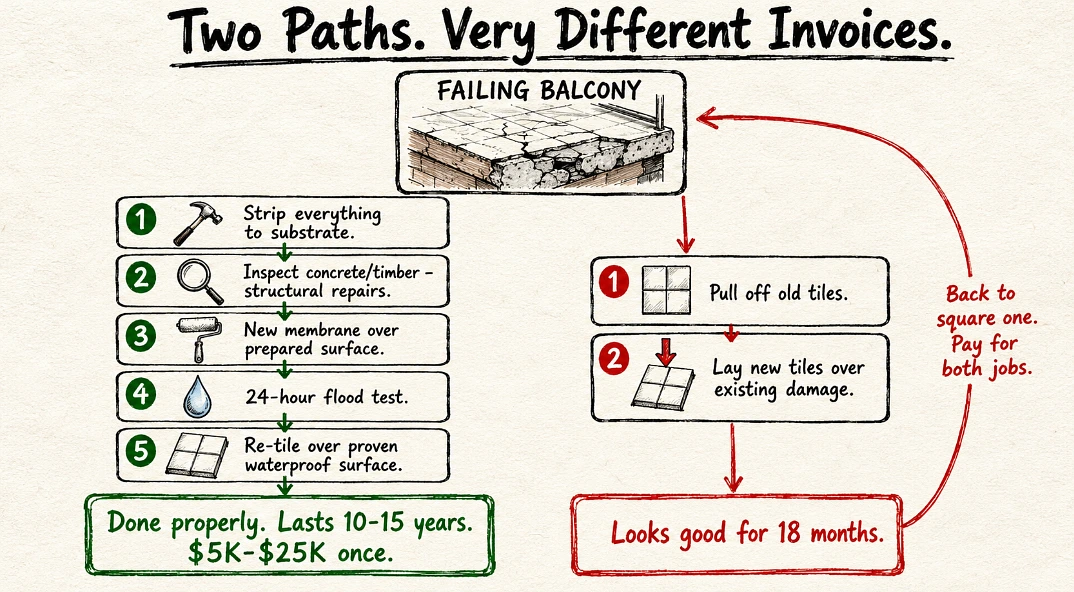
At some point during stage two or stage three, someone always suggests the shortcut. Just tile over it. The old tiles are cracking, the grout is failing, so pull them off and put new tiles down. Cheaper. Faster. Looks good again.
This is the single most expensive mistake homeowners and small strata committees make on balcony work in Sydney.
Tiling over a leaking balcony traps the existing moisture between the new tiles and the slab. That trapped moisture keeps feeding whatever failure is happening underneath. If it’s concrete cancer, the reinforcement keeps rusting. If it’s timber, the rot keeps spreading. Meanwhile the new tiles are being laid onto a substrate that’s still moving as it deteriorates, so within eighteen months to two years they crack, they lift, and the homeowner is back at square one, having paid for two tile jobs and no actual repair.
The only pathway that works is what remedial builders call strip and seal. That means everything comes off, right down to the structural substrate. Then the concrete or timber gets inspected properly, structural repairs happen where needed, and a fresh membrane goes down over a properly prepared surface with correct primer, bond breaker, and detailing at every junction. Before anything gets tiled back over the top, the new membrane sits under a 24-hour flood test. If it holds water for a day, you’re good to re-tile.
Done properly, a Sydney balcony repair like this ranges from $5,000 for a straightforward job on a small unit balcony to $25,000 or more on a strata balcony that needs engineering input and scaffolded access. Done as a tile-over, it’s cheaper on the invoice today and costs the same amount plus the tile-over money in two years’ time. Every remedial builder in Sydney has stories about coming in to fix a balcony that was tiled over eighteen months ago.
The Strata Bit Not Anyone Wants to Read
In New South Wales strata schemes registered after mid-1974, the balcony waterproofing membrane is common property. Which means the Owners Corporation carries the duty to maintain it under the Strata Schemes Management Act 2015. When water from a failed balcony damages the unit below, the OC has legal obligations that don’t go away because the committee is busy or the sinking fund is empty.
Where this gets ugly:
The damage crosses lot boundaries and now two owners are arguing about who’s responsible for what. Owner-installed tiles or a previous renovation modified the original membrane and there’s a question about whether that voided the OC’s responsibility. The OC was formally notified months ago and did nothing, so now there’s a Tribunal application on the way. Insurance denies the claim because the building’s maintenance records don’t exist or don’t demonstrate reasonable care.
The single most useful thing an OC or a self-managed building can do is keep documentation. Annual inspection notes, photos, records of what was found and what was actioned. It’s boring administrative work. It’s also the difference between a straightforward insurance claim and a contested one that drags on for a year.
What Actually Buys You Time
Membranes have a lifespan. Even a well-installed modern balcony membrane isn’t going to last forever, and in Sydney exposure conditions the realistic upper limit is around 10 to 15 years depending on the system, the workmanship, and how the balcony gets used.
What extends it: someone actually looking at the balcony once a year. Not an inspection contract, not a certificate, just walking out onto it with functioning eyes and checking whether anything looks different from last year. Efflorescence that wasn’t there before. A grout joint that’s crumbling. Sealant around the balustrade fixings that has gone brittle or lifted. Water pooling in a spot that used to drain.
Any of those spotted early is a $2,000 conversation. Any of those ignored for three years is a $20,000 conversation.
That’s the whole thing, really. The building doesn’t fail because of some inevitable structural doom. It fails because the small signs got walked past for long enough that they stopped being small.
Every Sydney balcony is somewhere on this progression right now. The ones caught early become maintenance records. The ones caught late become special levies. The variable isn’t luck.
 Decor & Improvement Accessories