

Home & Decor Blogs: DIY, Interior Design & Lifestyle Ideas
How to Choose the Right Fence Style for Your Home’s Architecture

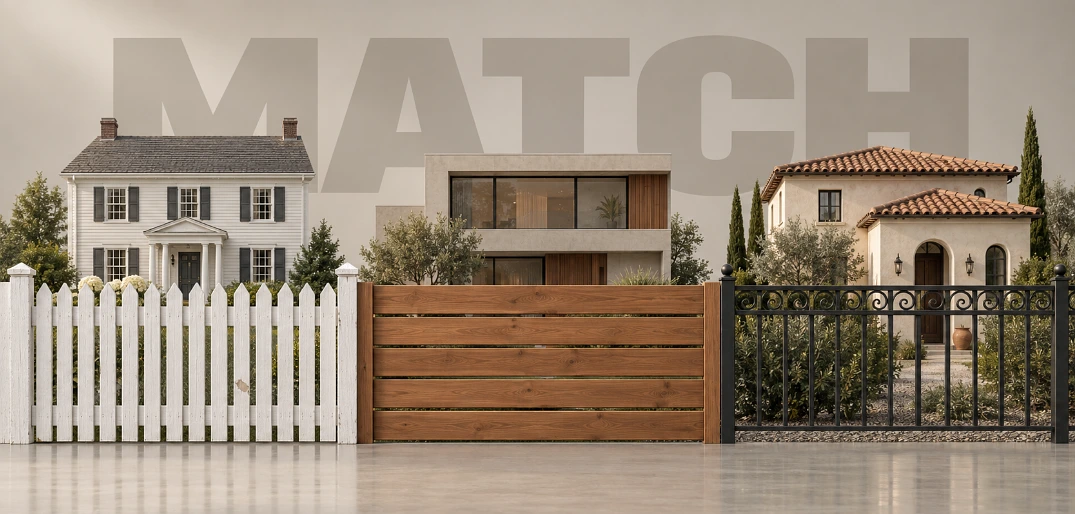
A fence not only marks a property line. It has impacts on privacy, security, curb appeal, and the visual connection between a home and its yard. As such, the choice of a fence should not just be based on how appealing that particular design or material looks in isolation.
Architecture of the home is an important base after all. Matching the proportions, materials, colors and character of the fence to that of the home can unify the property. It also seamlessly aligns with larger outdoor-living and home-improvement planning, where fencing systems collaborate with landscape, deck/pergola/design/path/other hardscape work.
Here is how you can select a fence design that will complement your residence’s architecture and meet your practical needs.
Considering your home’s architecture when picking a fence
There is a visual language for every home, manifested in its roofline, windows and doors as well as the exterior materials, colors and proportions. The fence is yet another visual component of that design.
However, you might find, for example, that a basic horizontal fence works better next to a home designed with an eye towards contemporary clean lines while something like a traditional picket fence feels more at home beside a classic-style house.
Consider four important elements:
Shape: Choose fencing styles visually compatible with the curves and outlines of the house.
Materials: Determine if wood, metal, masonry or other materials coordinate with existing exterior finishes?
Color: The fence should match the main and secondary colors of the house.
Scale: Height and visual weight of the fence must fit with relative size of house/property.
The objective is not to make the fence a duplicate of the house. Rather, elements should be so intermingled that they feel they have come from the same property.
A Good Rule Of Thumb Is To Match The Fencing Style To That Of Your House.
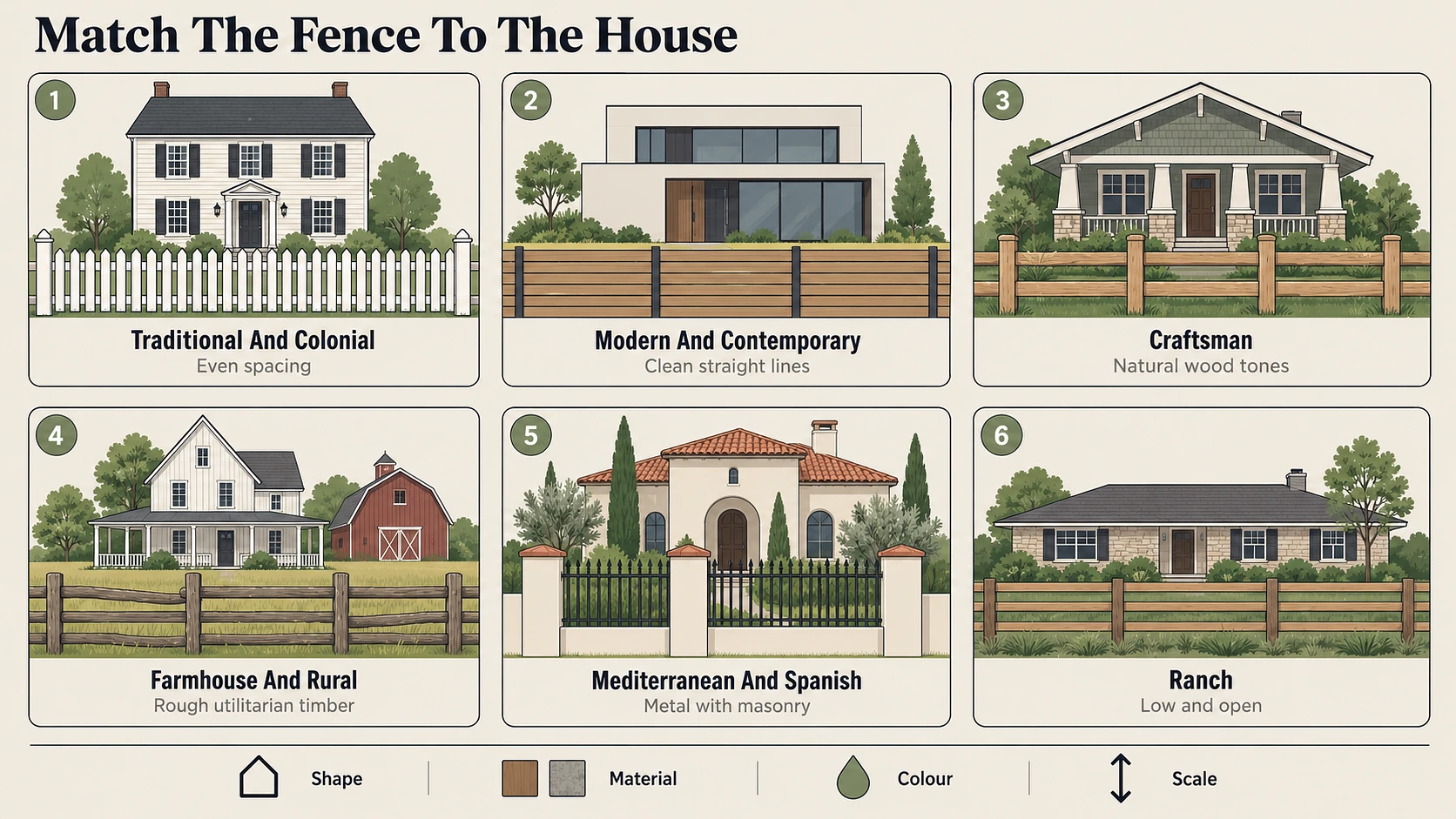
Traditional and Colonial Homes
With a symmetrical design, balanced proportions and classic architectural details, the Traditional and Colonial seem to fit right into an era of architecture all their own. These features can be complemented with a conventional wood picket fence, post-and-rail style, or vertical fencing that is spaced strategically.
Simple really works better than a kitchen that is far too elaborate for many of these homes. Uniform spacing and relative proportions help to maintain the traditional look of a home.
Modern and Contemporary Homes
Contemporary houses are also generally characterized by boxy shapes, minimal ornamentation, and a focus on clean lines. Horizontal board fence designs, simple metal panels or clean geometric patterns usually will work out great.
Contemporary property: you don’t need an expensive or complex fence to be contemporary. In most cases, something more straightforward with a solid line can form a better connection to the house.
Do not use decorative detail systems which will compete with the home’s modern architecture design.
Craftsman-Style Homes
Craftsman style houses are characterized by the use of many natural materials, large columns, visible wood details and long horizontal lines. This is particularly well matched with wood fencing.
An extremely basic version of a post & rack fence can mimic architectural detail already incorporated around the house. Natural wood tones provide continuity with features like existing porches, beams, or other external woodenwork.
Farmhouse and Rural-Style Homes
Fencing in farmhouse-style properties tends to have a utilitarian feel. You can strengthen the laid-back style of this type of architecture with post-and-rail, split-rail and traditional wood-designed fences.
The surrounding landscape also matters. Straight fences are especially effective in combination with gardens, native plants, gravel paths and landscaping that looks natural.
Mediterranean and Spanish-Style Homes
Stucco as a textured element with warm colors, tile roofs and archways is seen on many Mediterranean- or Spanish-style homes.
Metal fencing goes well with these properties especially when combined with masonry walls or stucco finishes. Darker toned metals introduce contrast while still preserving its traditional landscaping feel.
The key is moderation. Metal exterior ornamentography makes more interesting decorative architecture at the same time, but too much ornate brass and copper can spoil the various other ornamental features of a home.
Ranch-Style Homes
Ranch type homes are generally low and horizontal in stature. This is why horizontal fences or even open fence designs typically work too.
A high fence that is too large, visually heavy fence can overpower a low-profile ranch house. An open system of fencing can also help hold onto some of that openness this style is known for.
Choose the Fence Material as Thoughtfully as the Style
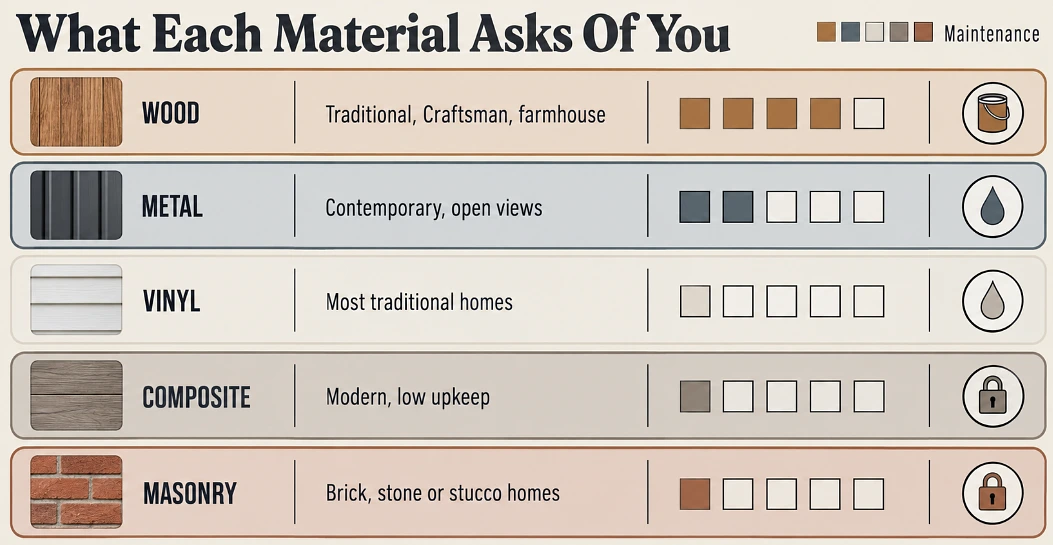
Material also influences how long it will look relatively new:
- Wood has a warm, versatile look that matches with traditional, Craftsman, farmhouse and most modern homes.
- And metal can be good for a sleek or contemporary look and is particularly desirable when an open visual divide will do the trick.
- Vinyl has a very neat appearance, can adapt to most traditional residential styles and requires comparatively little maintenance.
- Composite materials offer a modern aesthetic with a focus on durability and minimal maintenance.
- Masonry can build a large wall, and it could work with properties that already have brick, rock or stucco.
The best material is not necessarily the one that looks prettiest. As per the climate of the property, maintenance around it, budget and function it has to fulfill.
Consider Fence Height and Proportion
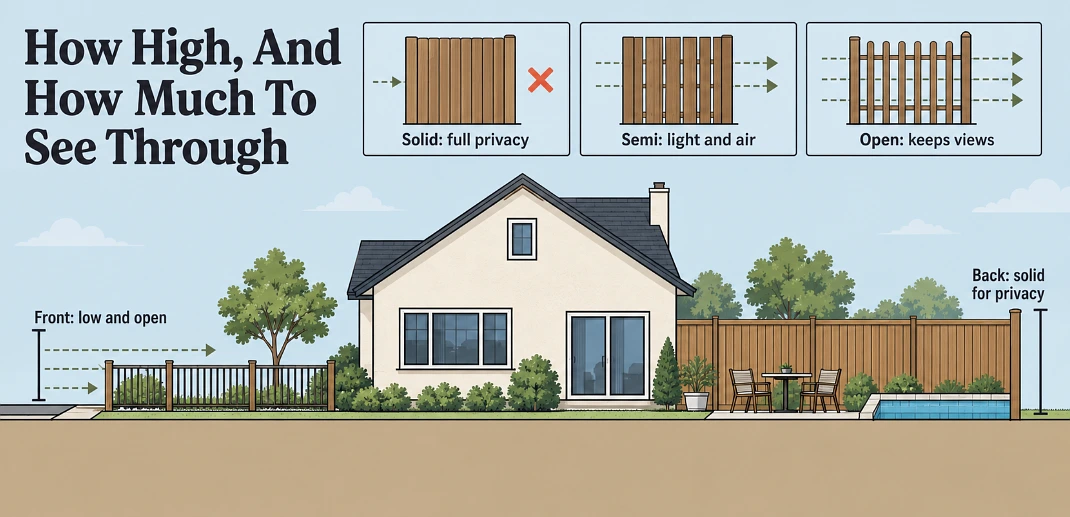
Proportion is easy to overlook.
Any fence should reference the home and yard. An extremely high, sturdy fence can make for an even greater restrictive property while a shorter fence may not be enough staying within the parameters of privacy or security where they are necessary.
Think about contrast in front and backyards. What appeals to one homeowner is a relatively open boundary in the front yard and greater privacy (with accompanying landscape and hardscape) for the backyard.
Homeowners should also research local regulations, property restrictions, and neighborhood or homeowners’ association requirements before deciding on a height.
Opt for Privacy or an Open Colour
Your fence design must depend on how much visibility you want.
Because solid board fencing can offer significant privacy, it’s ideal for use in yards, pool areas, patios, and outdoor entertaining spaces. Semi-private designs allow some manner of separation, yet let light and air flow through that boundary.
If you want to maintain views or keep the appearance of an open enclosure, open fencing is probably the better choice.
There is no right answer. The balance between the two will greatly depend on how an outdoor space is used.
Coordinating Fence Color With Your Home
This fence does not need to match the house exactly.
Rather see relationships between the fence and existing entities as:
- Siding
- Brick
- Stone
- Roofing
- Trim
- Doors
- Windows
- Outdoor furniture
- Landscaping
Natural wood tones might work with warm exterior materials of a home, or darker finishes can nicely contrast light siding or stucco.
Check color samples outdoors before making any final decision. The shift you can see in the way that the finish looks with natural sunlight versus what you see in a showroom inside (or digitally) is monumental.
But Remember the Area Surrounding the Fence
The vast outdoors is not only a fence.
Depending on what surrounds it, its appearance can vary significantly. Plants, shrubs, flower beds, pathways, decks, pergolas stacks, patio outdoor lighting all have an impact on the appearance of the boundary.
A plain fence can be a solid landscape element, transformed by selecting plants that soften the lines. Conversely, this type of dense planting can cause an already ornamental fence to appear gaudy.
On the other hand, it can lead to more balanced results by considering the entire yard instead of just its fence. Companies like 78 Fence are multi-leveraged, spanning fencing and broader outdoor hardscape components that show how boundaries can be woven together with features such as decks, pergolas, retaining walls, walkways & exterior spaces.
Avoid These Common Mistakes in Fence Selection
The fence we often see is put up only for the sake of beauty, ignoring the harmony of the house architecture with many common mistakes.
Other mistakes include:
- Choosing a fence that is too high for the plot
- Ignoring existing exterior materials.
- Selecting a high maintenance material with little thoughts given to how it needs to be looked after
- Focusing on privacy to the detriment of airflow and natural light
- Making style-bearing decorative details into conflict with the house sense.
- Not considering gates and entry points
- Not researching the local regulations prior to construction
Considering these factors before you purchase can prevent a lovely fence from being an ugly eyesore.
IntelQuiz: Questions Before Selecting a Fence
Homeowners can even ask before they finalise their decision-Pay Per Click :
- My Home, What Type of Architecture is my house
- What do I really need in terms of privacy?
- Which fence materials will go with the outside of my house?
- How tall is the property supposed to be?
- What maintenance can I tolerate?
- First, the fence can be left open, semi-private or totally private.
- How will the fence work with my landscaping?
- Should the gate be styled similarly?
- Local building, zoning or HOA requirements?
These questions can really help you narrow down your options quite a bit.
Final Thoughts
The ideal fence style is one that achieves a compromise of aesthetics, functionality, scale, material and home personality. For the fence should provide your property with the privacy, security or boundary definition that it was intended to do while simultaneously clashlessly fitting into its surroundings. Instead of picking a fence alone, examine the home, garden, landscaping, outdoor structures and archways as pieces of an over-all concept. When these elements play well together, a
 Decor & Improvement Accessories