

Home & Decor Blogs: DIY, Interior Design & Lifestyle Ideas
What First-Time Homeowners Often Overlook When Furnishing a Living Space

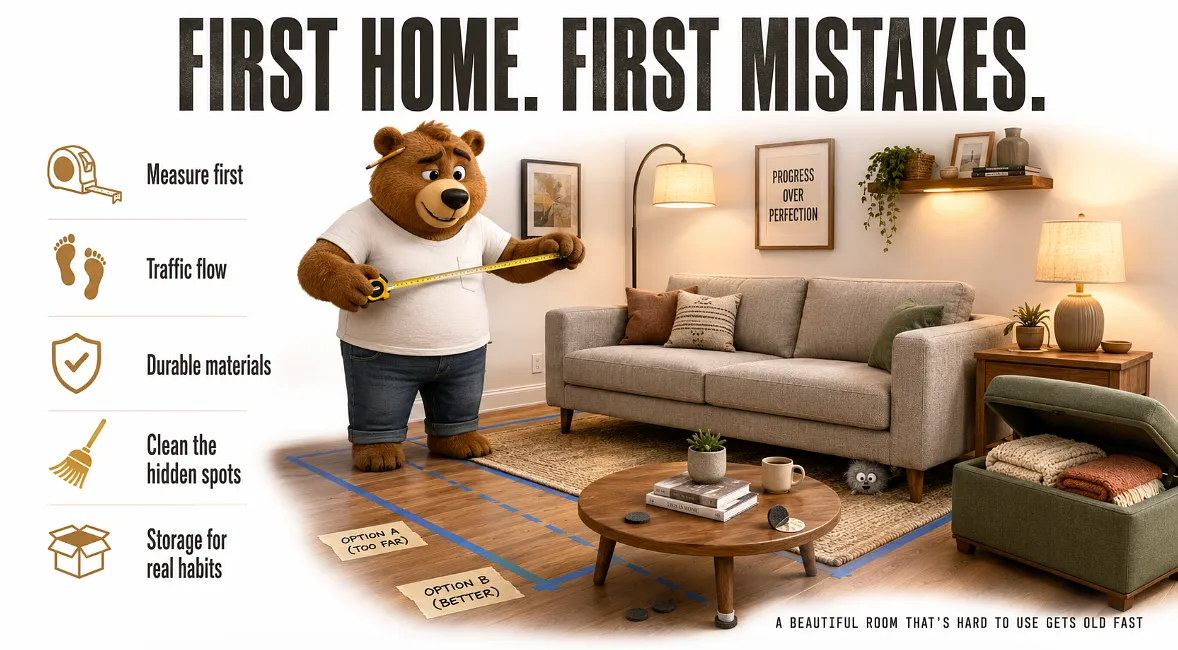
Buying your first home feels huge (NOT THE HUGE HOME, BUT FEELING). As you get the keys, walk through the empty rooms, and suddenly every wall, corner, and awkward little nook looks like a decision waiting to happen. A sofa goes there. A vase; Maybe a dining table with contrast to the door. Maybe a reading chair by the window, because you’re definitely going to become the kind of person who reads by natural light on Sunday mornings.
Then reality kicks in.
Furnishing a living space isn’t just about picking pieces that look good. It’s about how you move, clean, host, relax, and live in that space every day. First-time homeowners often focus on style first, which makes sense. You want your home to feel like yours. But the less exciting details, like measurements, floor protection, traffic flow, and hidden dust, matter just as much.
A beautiful room that’s hard to use gets old fast. A practical room that still feels warm and personal? That’s the sweet spot.
Measure First, Fall In Love Later
Now this is what the core idea is: Furniture always looks smaller in a showroom or online listing. A sectional that seems cozy on a website can swallow a small living room whole. A coffee table that looks sleek in photos can turn into a shin-banging machine if it leaves only a few inches of walking space.
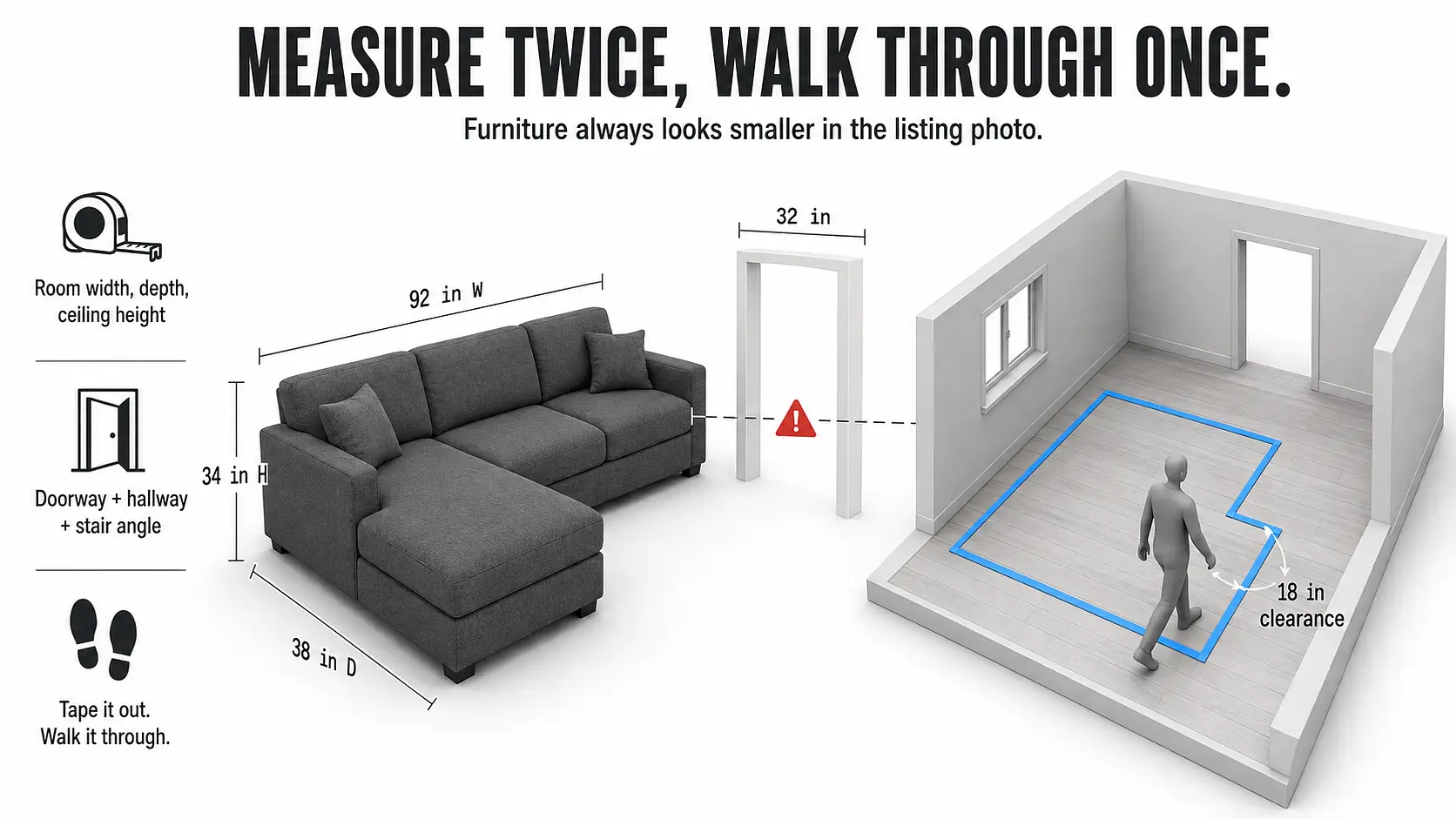
Before buying large pieces, measure the room. Then measure again. Write down the width, length, ceiling height, doorway size, hallway width, and stair angles if furniture needs to be carried upstairs. It sounds tedious, but it saves you from the classic first-home mistake: ordering a dream couch that can’t fit through the front door.
Painter’s tape helps a lot. Mark the floor where each piece will sit. Walk around it. Pretend you’re carrying laundry, a plate of snacks, or a half-asleep toddler. Can you move through the room without doing a side shuffle? If not, the layout needs work.
A good living room needs breathing space. Not space, exactly, but breathing space. Your furniture should support the room, not bully it.
Traffic Flow Is More Than A Design Term
Traffic flow sounds like something an interior designer says while holding a clipboard, but it’s really simple. It means people can move around without bumping into things.
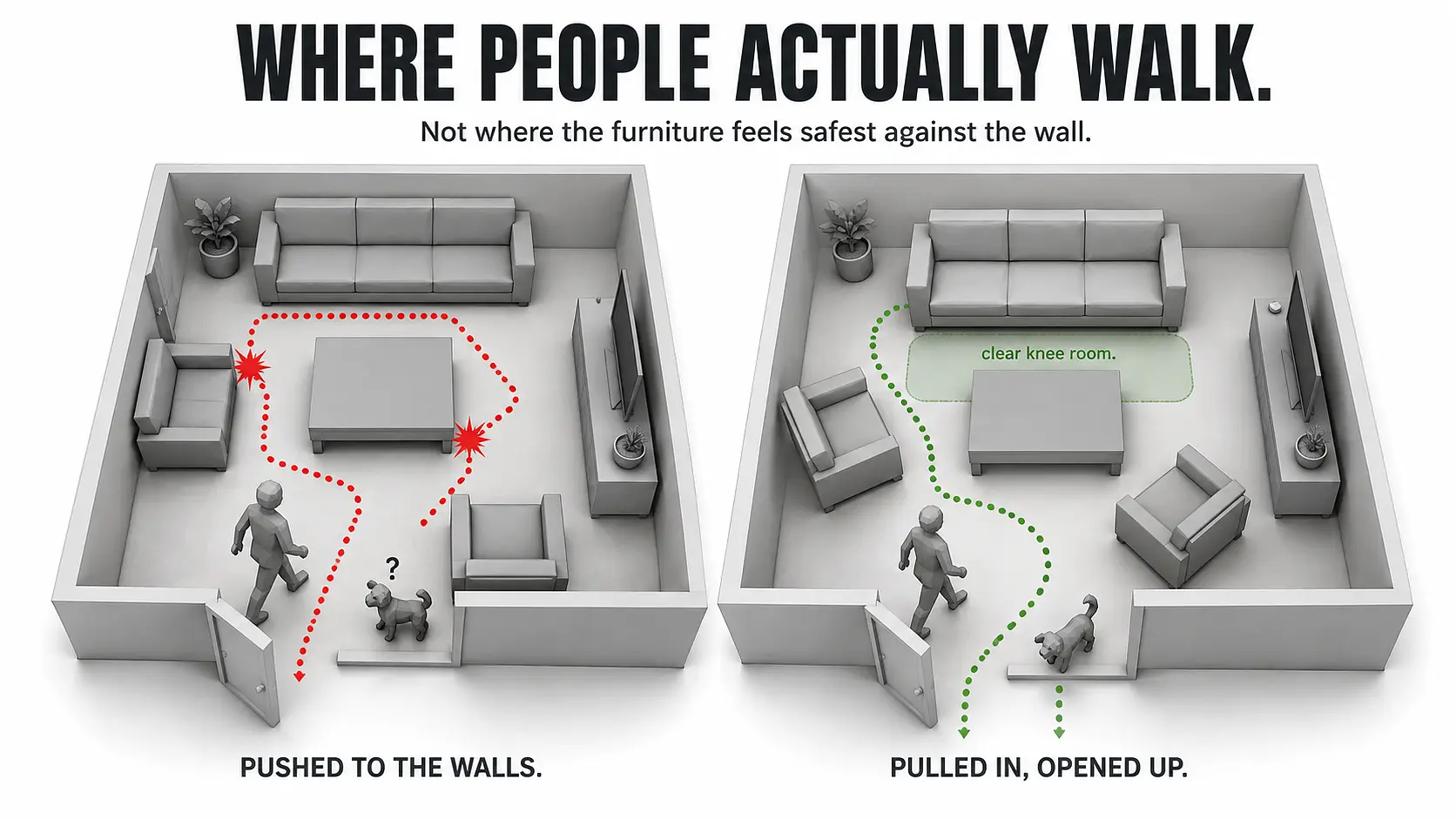
New homeowners often place furniture against every wall because it feels safe. But sometimes pulling a sofa forward or angling a chair creates a warmer setup. The trick is to think about how people actually enter and leave the room. Where do they sit first? Where do they put drinks? Where does the dog sprint when the doorbell rings?
You’ll want clear paths between main areas. Keep enough room between the sofa and coffee table so people can sit down without knocking their knees. Leave space near doorways. Don’t block vents, outlets, windows, or access panels. These little things don’t seem important until you need them.
And don’t forget lighting. A room with one ceiling light often feels flat at night. Add lamps at different heights. A floor lamp near a chair, a table lamp beside the sofa, and maybe a soft light near a shelf can make the space feel calm without trying too hard.
Durable Materials Matter More Than You Think
That pale linen sofa looks dreamy RIGHT? It also shows coffee, pet hair, denim dye, and mystery smudges from everyday life. Honestly, first homes teach you fast that furniture needs to survive real use.
Durable does not mean boring. Performance fabrics, leather, washable slipcovers, sealed wood, and stain-resistant rugs all help keep a living space looking good. If you have pets, kids, or a habit of eating dinner on the couch, pick materials with that in mind.
Think about climate too. In humid areas, some materials warp, trap odors, or hold moisture. In sunny rooms, fabrics fade. If your living room gets strong afternoon light, consider window treatments and fade-resistant upholstery.
Rugs deserve special attention. They soften the room and help define the seating area, but size matters. A tiny rug floating under a coffee table can make the room feel unfinished. In many cases, the front legs of the sofa and chairs should sit on the rug. It anchors the space, like a frame around a picture.
Floors Need Protection Before They Need Repair
First-time homeowners often forget about floors until they see scratches. Chair legs, sofa feet, plant stands, and coffee tables can leave marks faster than expected, especially on hardwood, laminate, and vinyl plank flooring.
Add felt pads under furniture legs before moving pieces into place. Use rugs in high-traffic areas. Put trays under indoor plants, because water rings are sneaky. If you use rolling chairs or movable ottomans, check the wheels. Some are rough on floors.
This is one of those small tasks that feels too simple to matter. But it matters. Floor repairs cost money, and replacing sections of flooring can become a whole thing. A few pads and rugs can now save you from a headache later.
Also, lift furniture instead of dragging it. Yes, even when you’re tired. Especially then.
Hidden Messes Are The Sneaky Part
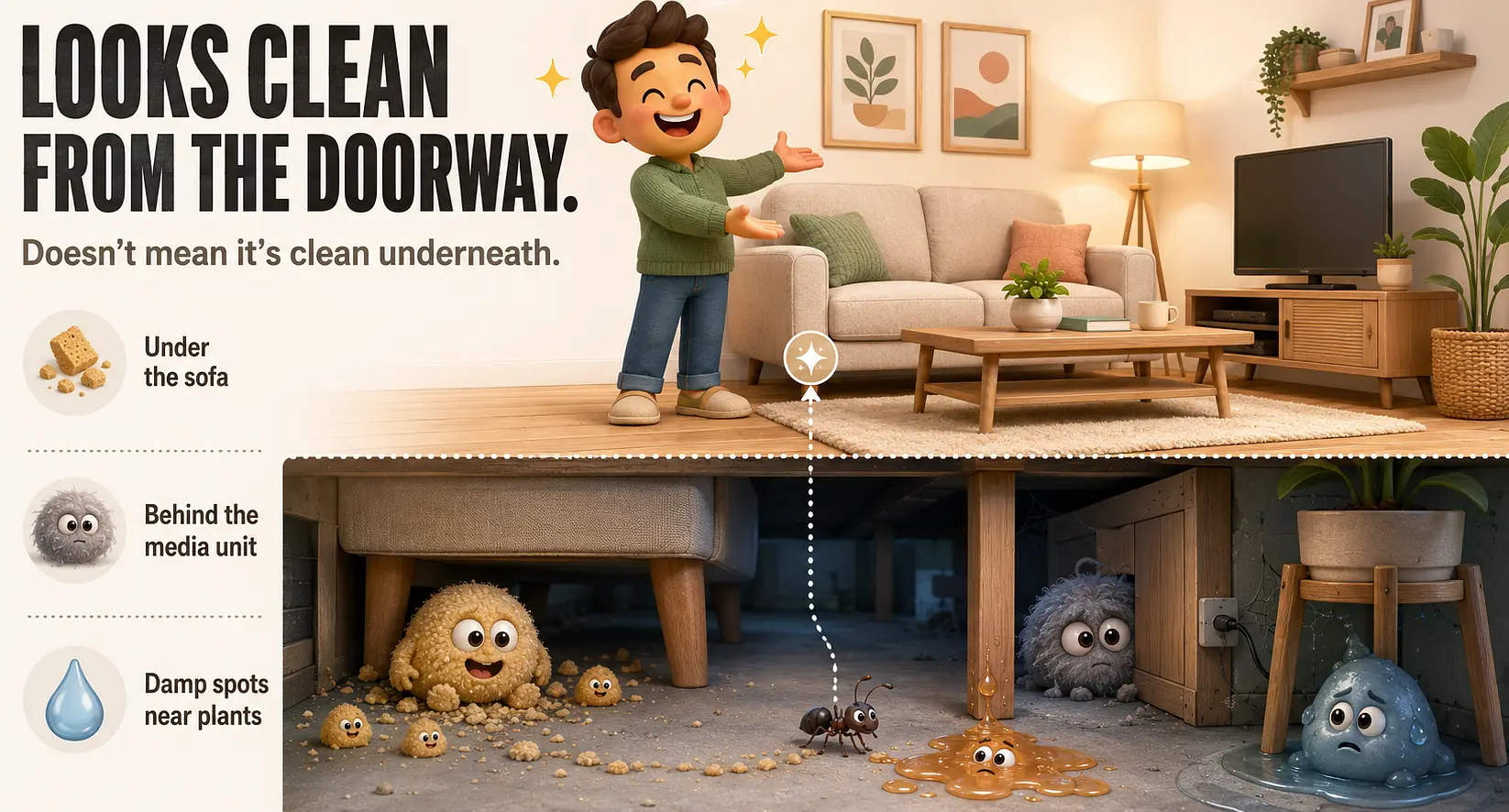
A living room can look clean from the doorway and still hide crumbs, dust, pet hair, and moisture behind the scenes. Large furniture creates quiet little zones where mess builds up. Under the sofa. Behind the media unit. Beneath storage benches. Along baseboards. You don’t see it every day, so it’s easy to forget.
But pests don’t forget.
Crumbs under furniture, sticky drink spills near the couch, damp spots behind plant stands, and small gaps near walls can attract ants and other pests. That’s why furniture planning and home maintenance belong in the same conversation. If you’re dealing with repeated ant activity, especially around hidden areas, professional help like pest ant control services can make sense as part of a broader home care plan.
You don’t need to become obsessive. Just make the space easy to clean. Choose furniture with enough clearance for a vacuum or mop. Use storage baskets that can be moved. Avoid pushing every piece tightly against the wall. Leave a little room where possible so air can move and cleaning doesn’t become a full-body workout.
A tidy home isn’t always spotless. It’s just manageable. That’s the goal.
Storage Should Work With Your Real Habits
Storage sounds simple until you live without enough of it. Then the coffee table becomes a mail pile, the sofa becomes a laundry zone, and the floor becomes a temporary storage system that somehow stays temporary for six months.
Choose storage that fits your actual habits. If you drop keys and bags near the entry, add a small console table, hooks, or a basket. If you have blankets in the living room, use an ottoman with storage or a lidded basket. If you own gaming consoles, books, candles, board games, or workout gear, plan for them before they scatter everywhere.
Built-ins are nice, but not required. A sturdy media cabinet, closed shelving, nesting tables, and multi-use benches can do a lot. Closed storage keeps visual clutter down, which helps the room feel calmer.
And here’s a small truth: open shelves look great when styled, but they need dusting. If you don’t like dusting, don’t build your whole living room around open shelves. That’s not failure. That’s self-awareness.
Leave Room For Life To Change
Your first living room doesn’t need to be finished in the first month. In fact, it probably shouldn’t be. Homes reveal themselves slowly. You’ll learn where the light hits, where guests naturally sit, which corner feels empty, and which chair nobody uses.
Buy the key pieces first: sofa, rug, lighting, basic storage, and maybe a coffee table. Then pause. Live in the room. Notice what feels awkward. Notice what you reach for and what you keep moving out of the way.
Life changes too. You may host family dinners, bring home a pet, start working from the living room, or plan bigger milestones. Some homeowners are settling into a new place while also thinking about weddings, family visits, or future celebrations. It’s all connected in that funny, real-life way. Homes are not showrooms. They hold plans, people, and the occasional pile of boxes you swear you’ll unpack soon.
The Best Living Spaces Feel Easy
A good living space doesn’t have to be expensive or picture-perfect. It needs to feel easy to use. You should be able to walk through it, clean it, relax in it, and enjoy it without constantly adjusting around bad choices.
First-time homeowners often overlook the practical stuff because the fun part is choosing colors, fabrics, and statement pieces. That’s fair. But the practical stuff is what keeps a room comfortable after the excitement fades.
Measure before buying. Leave room to move. Pick materials that match your lifestyle. Protect the floors. Clean the hidden spots. Plan storage around real habits, not fantasy habits. And give yourself time.
Your living room will come together. Not all at once, and not perfectly. But little by little, it will start to feel like home.
 Decor & Improvement Accessories