

Home & Decor Blogs: DIY, Interior Design & Lifestyle Ideas
What Causes Uneven Heating and Cooling Throughout the Home? Check These Five Things in Order
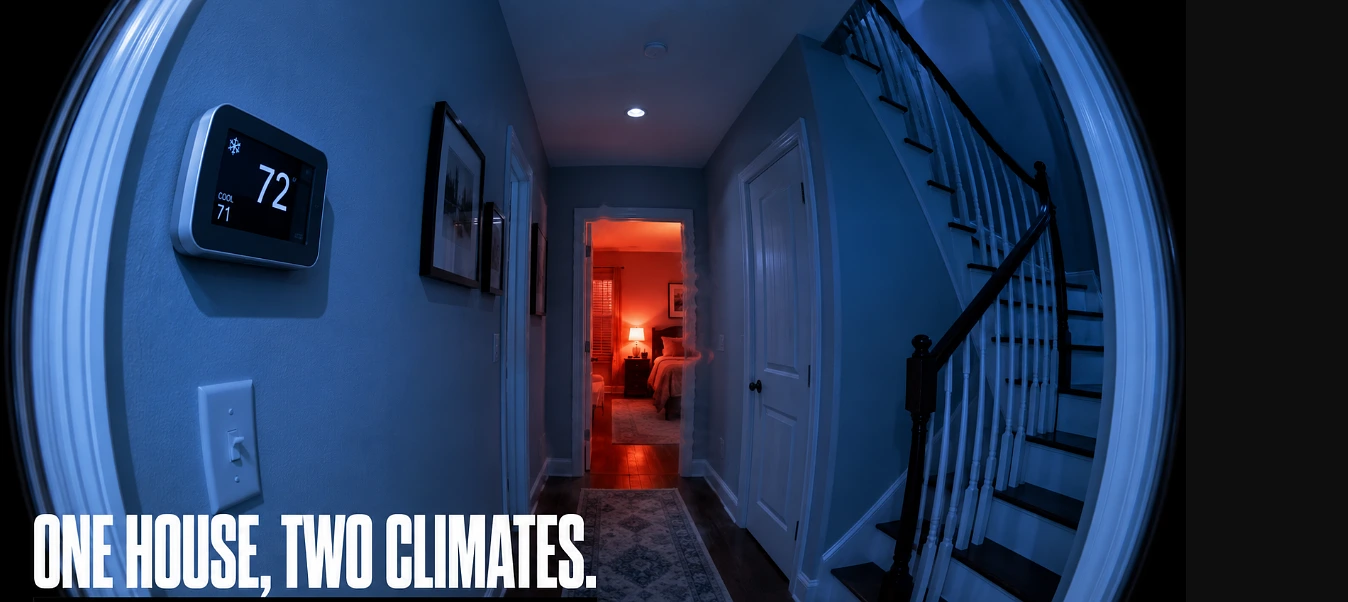
That back bedroom that never matches the thermostat is not being difficult, it is reporting a specific fault. Uneven temperatures come from five places: blocked airflow, a leaky building envelope, duct problems, wrong sized equipment, or one thermostat trying to govern a house that needs two. The smart way to diagnose it is in that order, because that also happens to be the order from free to expensive.
1. Rule Out the Free Stuff in an Afternoon
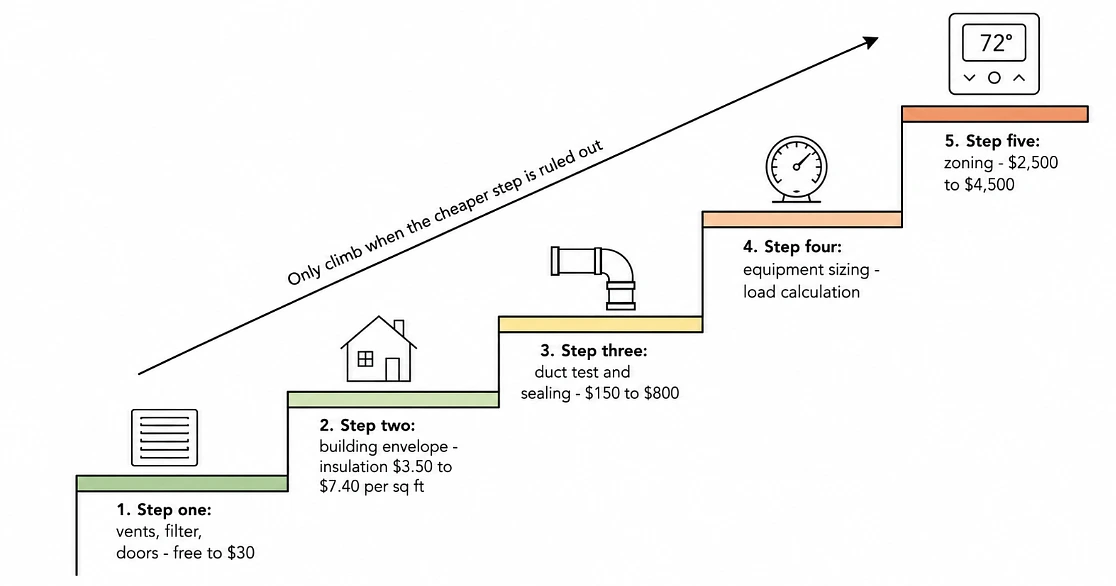
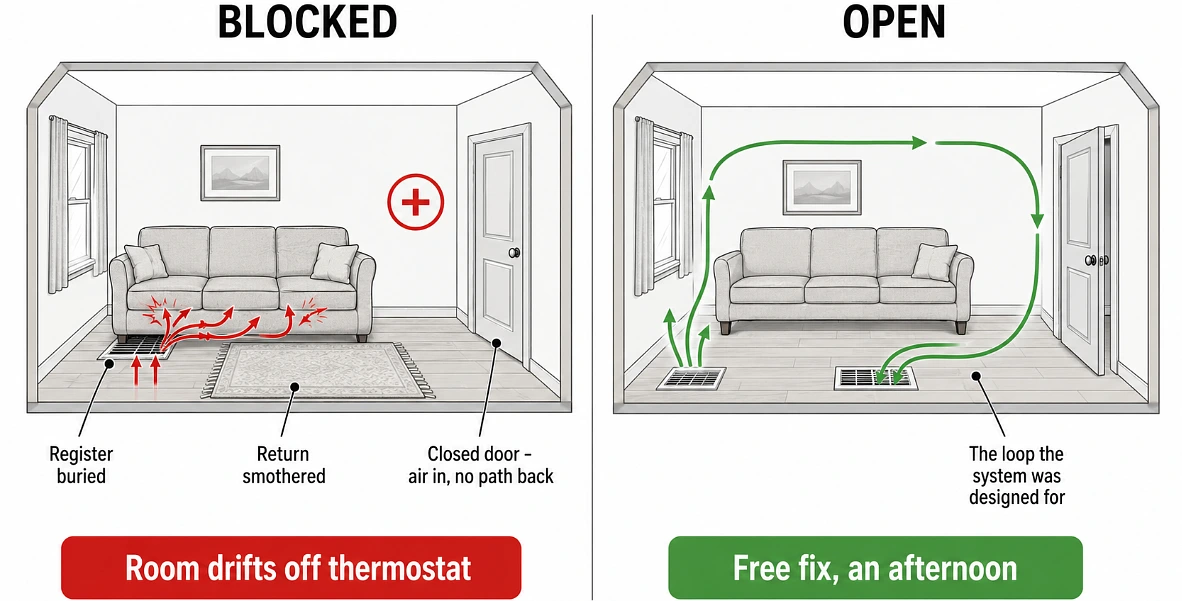
Walk every room and look at the supply and return vents before thinking about machinery. A couch parked over a floor register, a rug across a return, curtains draped over a vent, any of these unbalances the airflow the system was designed to deliver. Closed interior doors do the same thing by pressurizing rooms, air gets pushed in with no path back out, so flow to that room drops. And swap the filter if it’s older than three months, a clogged filter starves the farthest rooms first. All of this costs nothing and fixes more uneven rooms than seems fair given what the other fixes run.
2. Decide Whether It’s the House or the System
Does the problem room have a big west facing window, or sit directly under the roof?
Then the room itself may be the fault rather than the machinery. The building envelope, meaning the walls, windows, insulation, roof, and foundation, is what holds conditioned air in, and a room with thin attic insulation or single pane glass loses air faster than the system can replace it.
Upstairs rooms under a hot roof deck take the worst of it in summer, and large south or west windows add solar gain no thermostat can see. Attic insulation runs about $3.50 to $7.40 per square foot installed, and it is the rare fix that pays back in both seasons.
3. Your Ducts Are Probably Losing a Fifth of the Air
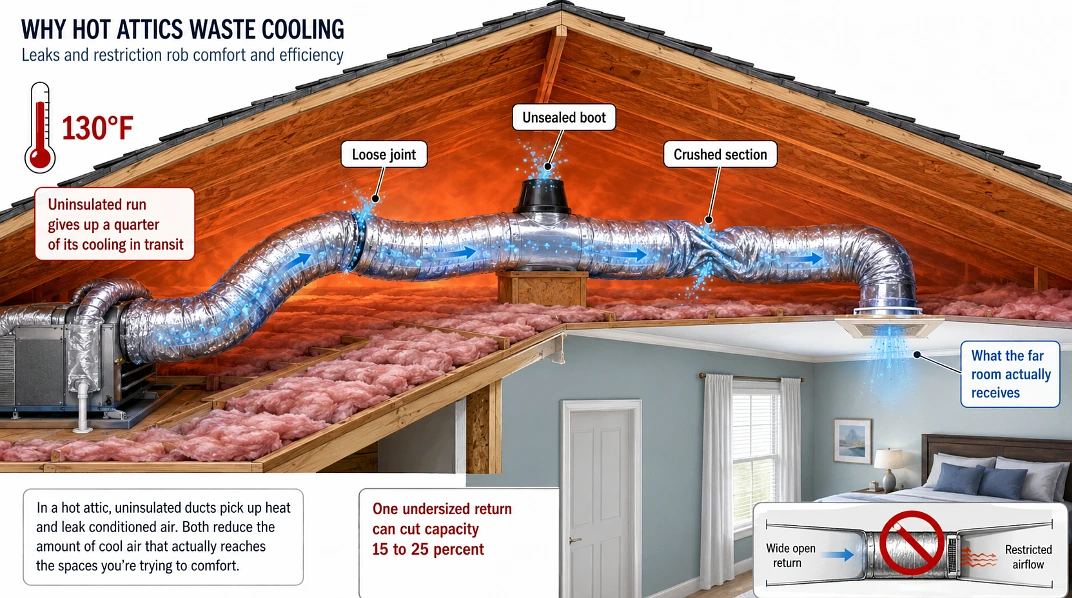
ENERGY STAR puts typical duct leakage at 20 to 30 percent of conditioned air lost through gaps and holes before it ever reaches a room. If the leaks cluster on the run feeding one part of the house, that part stays uncomfortable no matter what the equipment does. Ducts that snake uninsulated through a 130°F attic give up roughly a quarter of their cooling just on the trip. There is a less famous duct problem too, a single undersized return can choke the whole system, cutting cooling capacity by 15 to 25 percent while every supply vent looks innocent. A duct leakage or blower door test runs $150 to $300 and answers all of this with numbers, and sealing structurally sound ducts costs $250 to $800, which is why testing before replacing is the rule worth enforcing on any contractor.
4. Equipment That Was Never Sized for the House
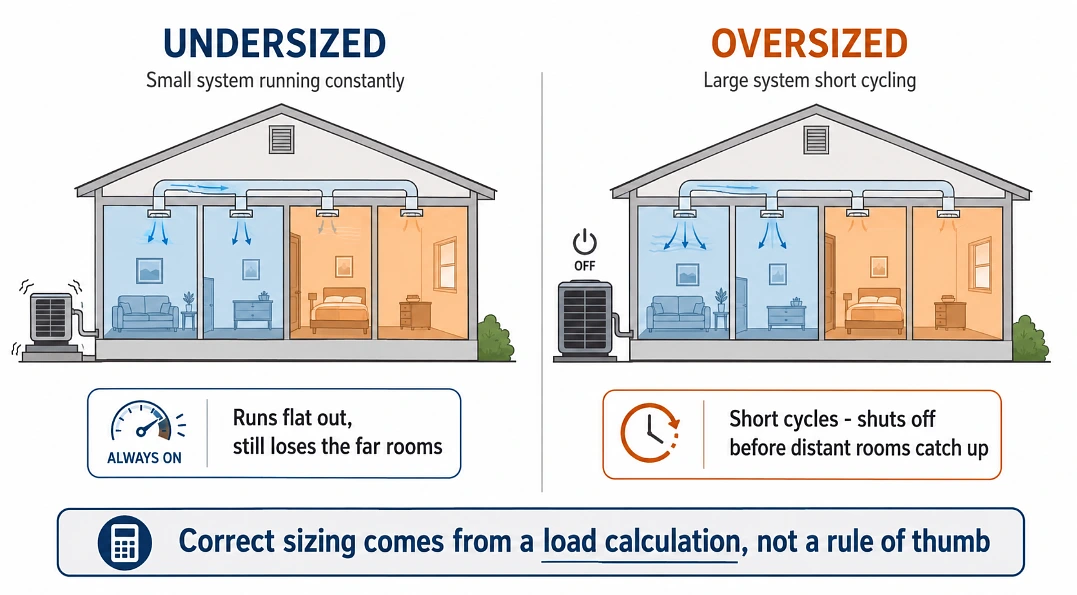
An HVAC system that’s too small runs flat out and still loses the far rooms. One that’s too big short cycles, blasting the near rooms and shutting off before the distant ones catch up. Correct sizing comes from a load calculation that weighs square footage, layout, ceiling heights, insulation levels, window count and type, occupancy, and local climate. When an installer skips that math and sizes by rule of thumb, uneven rooms become a permanent feature of the house. If your system arrived with a one day quote and no measuring, treat this as a live suspect.
5. One Thermostat Cannot Govern Two Stories
Heat stacks upstairs, the thermostat lives downstairs, and a single zone system averages the two into a compromise where the upstairs bakes so the hallway can hit 72. Zoning splits the ductwork with motorized dampers and gives each area its own thermostat, typically $2,500 to $4,500 for a three or four zone setup on sound ducts. For two story homes, it is often the fix that finally works after everything else only helped.
Quick reference on what the fixes run:
- Vent, filter, and door corrections: free to about $30.
- Duct leakage or blower door test: $150 to $300.
- Sealing sound ducts: $250 to $800.
- Attic insulation: $3.50 to $7.40 per square foot.
- Zoning system with three to four zones: $2,500 to $4,500.
- Diagnostic visit fee: $75 to $150.
A caution from the real world, these causes stack. Leaky ducts plus a hot upstairs plus an oversized furnace is a normal combination, not a rare one, and fixing only the loudest symptom moves the discomfort around instead of ending it. When the free checks and a test don’t settle it, have an experienced HVAC professional run the diagnosis end to end, static pressure, duct leakage, and the load math, before any money goes into equipment. The measuring is cheap. The guessing is what gets expensive.
 Decor & Improvement Accessories