

Home & Decor Blogs: DIY, Interior Design & Lifestyle Ideas
What Sets a Miami Kitchen Remodel Apart From the Others, and How to Hire for It


The majority of kitchen remodeling tips are the same no matter where you live. Set your budget, read the reviews, get a few quotes. True, true, and none of that is what actually gets people in trouble in Miami. A kitchen remodel here isn’t really competing with one in Ohio or Arizona. It’s fighting the heat, the humidity, a hurricane code, and a permit office that doesn’t operate like anywhere else in the country.
So before you launch into the usual contractor checklist, you need to understand what makes this city its own animal, because that’s the stuff a good Miami contractor handles in their sleep and a bad one quietly ignores until it becomes your problem six months later.
1. The Humidity Decides Your Materials, Not Your Taste
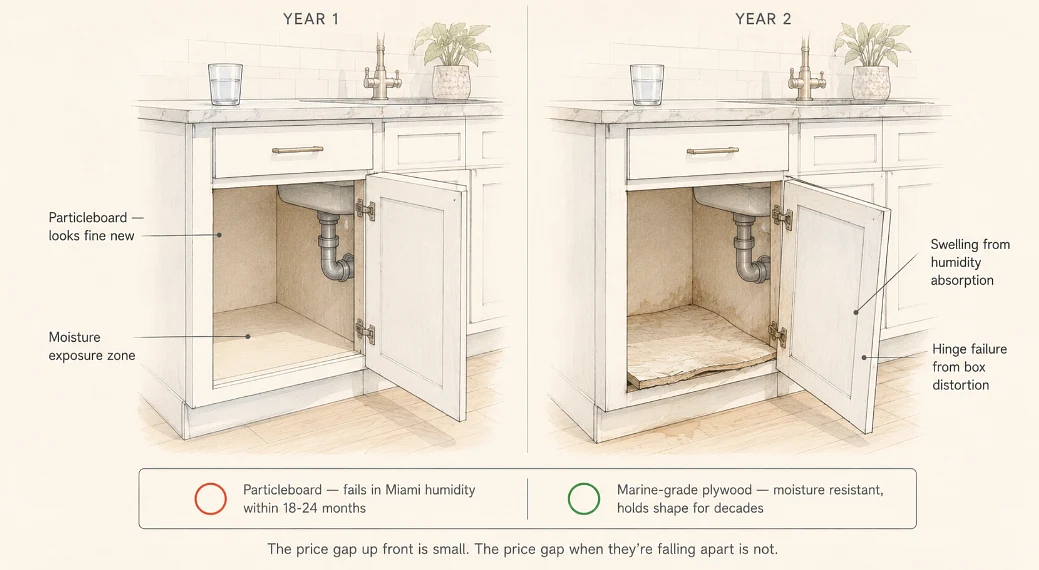
You can choose any finish you want, but South Florida gets the final say on what survives. Year-round heat and humidity go after the cheap stuff fast, and the most common casualty is the cabinet box.
Particleboard cabinets are the trap. They look fine in the showroom, then they swell, warp, and fall apart in a humid kitchen, especially anywhere near a sink or dishwasher. In a Miami remodel you want solid wood or marine-grade plywood with moisture-resistant finishes, full stop. The price gap up front is small. The price gap when they’re falling apart in two years is not.
It goes deeper than the cabinets, though, and this is where a contractor’s local experience shows:
- Adhesives and sealants matter more here. Standard products that hold up fine in a dry climate fail faster in Miami’s heat-and-humidity mix. A contractor who’s worked here specs accordingly, instead of using whatever’s on the truck.
- Installation has to happen in a humidity-controlled space. Tile, paint, and cabinets going in while the place is wide open and damp is how you get cracked grout lines and blistered paint half a year down the line. The contractors who skip this step create problems that don’t show up until long after they’ve cashed the cheque.
- Quartz tends to beat granite for the climate. It’s lower-maintenance in high humidity, which is partly why it’s become the default in a lot of Miami kitchens. Not a rule, just worth knowing when you’re choosing a counter.
2. Hurricane Code Isn’t Optional, and It Reaches Into the Kitchen
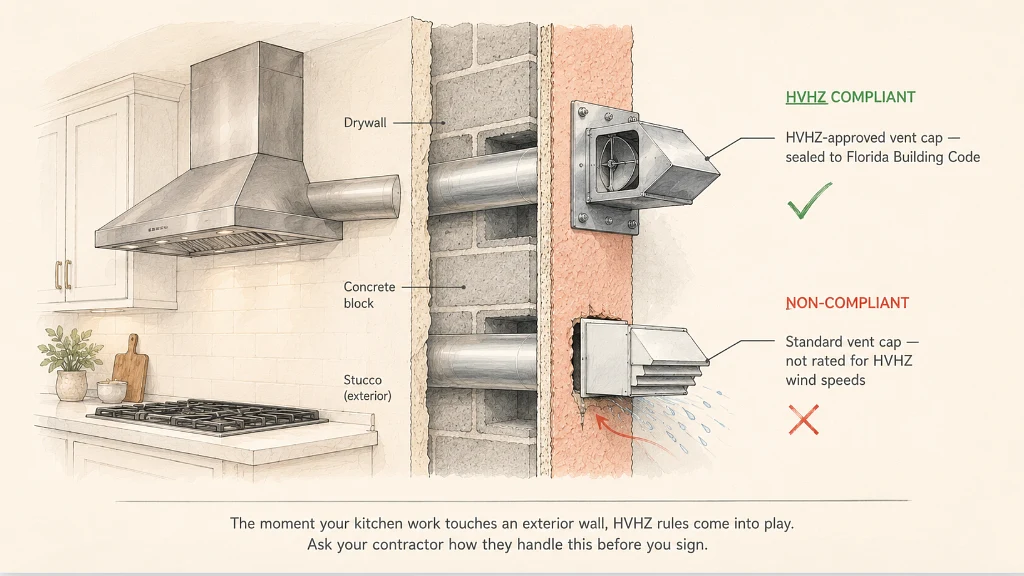
Here’s the one that genuinely surprises people. Miami-Dade sits in a High-Velocity Hurricane Zone, the HVHZ, and the wind-resistance standards here are among the strictest in the entire country. Most people think that’s a roof-and-windows thing. It’s not only that.
The moment your kitchen work touches an exterior wall, HVHZ rules come into play. Run a new range hood vent cap through an outside wall, duct a vent through the exterior block, add or change a window or skylight over the sink, and now you’re in code territory that demands HVHZ-approved fittings, sealed and installed to the Florida Building Code. A contractor who doesn’t flag this during planning is either unaware of the code or hoping you don’t notice until an inspector does.
This is the single best test of whether a contractor actually knows Miami. Ask them, early, how they handle HVHZ requirements on any exterior penetration in the kitchen. The right one will answer without blinking. The wrong one will get vague, and that vagueness is your warning.
3. Permits Here Are Heavier Than People Expect
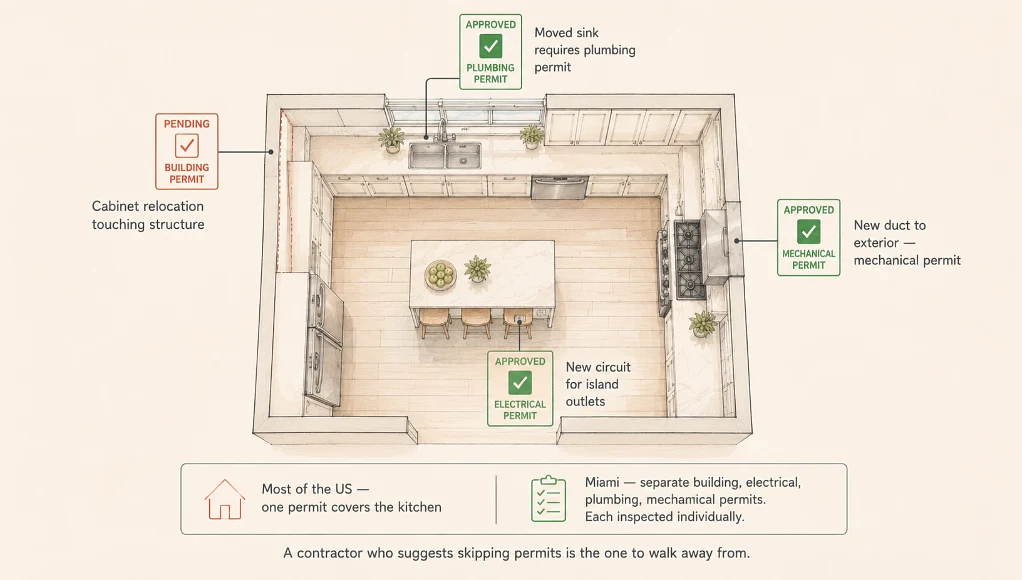
In a lot of the country a kitchen remodel is one permit. In Miami it’s usually several. Most projects that touch the systems pull separate building, electrical, plumbing, and mechanical permits, and each one gets reviewed and inspected on its own. More checkpoints, more fees, more coordination between trades.
A few things worth knowing before you start:
- Even “cosmetic” work can trigger a permit. Swapping cabinets in the same layout without touching utilities is often considered cosmetic and may not need one. But the second that swap touches a plumbing line or adds a circuit, you’re pulling a permit under the Florida Building Code.
- The fees are real but not crazy. Kitchen remodel permit fees in the Miami area commonly land somewhere in the few-hundred to low-four-figure range depending on scope. Budget for it rather than being surprised by it.
- A contractor who suggests skipping permits is the one to walk away from. Unpermitted work haunts you at resale and inspection. A licensed pro handles the permit process as part of the job. If they pitch going around it, that tells you everything.
This is exactly why a properly licensed and insured contractor matters more here than in a looser jurisdiction. The licensing isn’t a box-tick, it’s the thing that lets them pull these permits at all, and the insurance is what stands between you and the bill if something goes wrong on a job involving this much plumbing and electrical.
4. Plan Around the Calendar, Because the Calendar Doesn’t Care About Your Plan
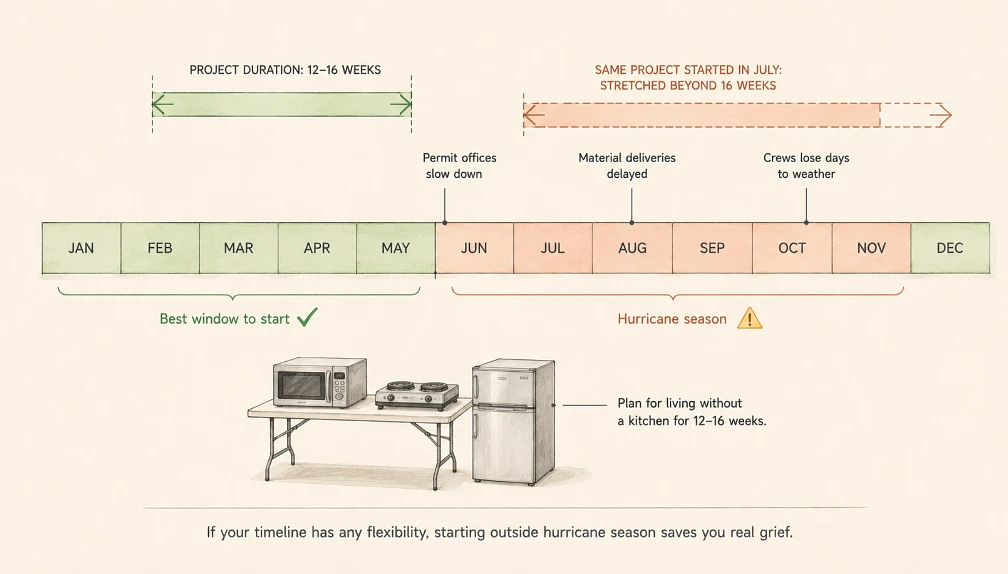
A standard kitchen remodel elsewhere might run eight to ten weeks. In Florida, expect more like twelve to sixteen, and a chunk of that is the stuff above, the multi-permit reviews, the mandatory inspections, the humidity-controlled sequencing that you can’t rush.
Then there’s hurricane season, roughly June through November. It doesn’t just mean storms. It means permit offices slow down, material deliveries get delayed, and crews lose days to weather. If your timeline has any flexibility, starting a major remodel outside that window saves you a real amount of grief. And whenever you start, plan for living without a kitchen for those weeks. A small fridge somewhere in the house, plus a microwave and a hot plate, goes a long way toward keeping you sane.
5. Now the Contractor Checklist Actually Means Something
With all that as the backdrop, the usual advice finally has teeth, because you’re not just checking generic boxes, you’re checking whether this person can handle Miami specifically.
- Start with a clear vision. Full renovation or cosmetic refresh, same layout or moving walls, what’s the budget. Know this before you call anyone, because it changes which permits you’re even looking at.
- Build a real shortlist. Recommendations from people you trust, then widen it online. You want options to compare, not the first name you find.
- Verify license and insurance, and mean it. In a multi-permit, HVHZ jurisdiction this is non-negotiable. Ask for the numbers and check them.
- Look hard at past Miami projects. Not just nice photos, but kitchens they’ve actually done in this climate and this code environment. Local track record is the whole point.
- Read the reputation, including how they handle complaints. Anyone can have a bad day. How they responded to it tells you more than the five-star reviews do.
- Get more than one quote, and don’t just chase the lowest. The cheapest bid in Miami is often the one quietly planning to skip a permit or spec the wrong materials. Compare value, not just the bottom number.
If you’d rather work with a team that already lives in all of this, a local outfit that handles kitchen remodeling in Miami day in and day out will know the HVHZ requirements, the permit sequence, and the materials that hold up here without you having to quiz them on every point. That local fluency is the difference between a remodel that goes smoothly and one that teaches you about the Florida Building Code the hard way.
A Miami kitchen remodel really isn’t just about picking tile you like. It’s about choices that hold up against heat, humidity, hurricanes, and a genuinely demanding climate, and about hiring someone who’s already fluent in all four. Get that right and the rest of it, the part everyone else writes about, takes care of itself.
 Decor & Improvement Accessories