

Home & Decor Blogs: DIY, Interior Design & Lifestyle Ideas
Why We Associate Bedrooms with Mind Security and Relaxation?

Studies have shown that humans feel more comfortable and relaxed in places where they associate physically and find privacy. In a home, a bedroom is mainly an area where people spend a larger portion of their routine, and the association becomes stronger with time.
In this article, we will share the main reasons why people consider their bedroom a place of relaxation and feel safe.
6 Reasons Why We Associate Bedrooms With Security & Relaxation
1. Bedrooms Provide Privacy
Privacy is a basic human right which needs to be fulfilled in our living space. People find the bedroom a most comfortable and private area as it provides a feeling of security and a space that only belongs to you, unlike other areas like the living room, lounges, kitchens, etc.
People use bedrooms to:
- Rest quietly
- Reflect on their thoughts
- Read books
- Listen to music
- Watch movies
- Relax emotionally
- Escape social pressure
All these activities contribute to reducing stress, developing a sense of feeling protected, and creating a personal sanctuary. These factors psychologically make a deep connection with your bedroom in terms of security and relaxation.
2. Bedrooms Are Linked With Sleep & Recovery
We all should agree that a peaceful sleep can only be in our own bedroom instead of any other spot. Because of this psychological association, the brain automatically feels comfortable and adapts to quality sleep, which improves:
- Mood
- Memory
- Energy levels
- Mental clarity
- Immune function
- Stress management
These healthy elements lead towards a quick recovery.
3. Bedrooms Offer Protection From The Outside World
Our body and brain want some space from the outside world and shelter in a comfort zone. To get relaxed, the bedroom is a perfect place to get recharged and spend quality time to reduce:
- Work stress
- Social anxiety
- Loud environments
- Family pressure
- Digital overload
- Emotional exhaustion
4. Personal Spaces Create Emotional Security
Humans naturally feel safer in their personal aesthetic environments. In a bedroom, a personalised setup of objects, scents, and memories that create emotional attachment and stability, which promotes safe sensibilities and helps to feel more relaxed.
Common comforting elements include:
- Personal photographs
- Favorite blankets
- Familiar furniture
- Decorative items
- Childhood memories
- Consistent room layouts
5. Bedrooms Allow Personal Control
It is a common factor that all of us feel more comfortable and safe when we have the ability to decide and arrange the surrounding the way we want.
Bedrooms are commonly the place where individuals can make personal choices about design, comfort, and atmosphere that promote personal control and improve inner satisfaction.
This includes control over:
- Room temperature
- Lighting
- Noise levels
- Decoration
- Bedding
- Furniture arrangement
- Privacy
6. Bedrooms Encourage Relaxation Rituals
Every person has a bedtime routine that is, by default, associated with calmness and relaxation. The brain catches the signal that it is time to get into bed and sleep.
These routines include:
- Reading before bed
- Having herbal tea
- Night skin care routines
- Meditation
- Listening to music
- Journaling
- Stretching exercises
Psychological Connection Between Bedrooms & Safety
Many studies have demonstrated that humans naturally want an environment that provides both physical and emotional protection. With regard to this, modern homes are much safer today; people value enclosed, private, and controlled spaces for rest.
The bedroom should provide:
- Safety
- Shelter
- Stability
- Recovery
- Personal identity
- Emotional comfort
This psychological association becomes stronger throughout life when people repeatedly experience comfort, sleep, healing, and peace within the same environment.
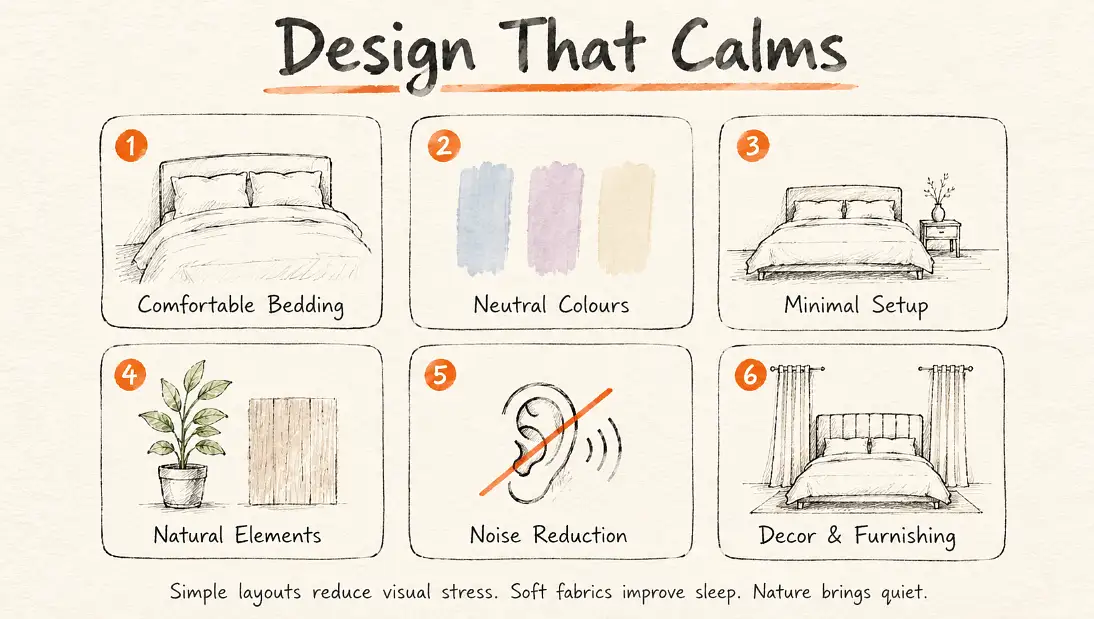
How Bedroom Design Influences Relaxation
- Comfortable Bedding
Soft and breathable bedding improves physical comfort and sleep quality.
- Neutral Colours
The shades like ice blue, lavender, and pastel tones create a peaceful environment.
- Minimal Setup
Simple layouts reduce visual stress and improve relaxation.
- Natural Elements
Add plants and wood textures to create a calming atmosphere.
- Noise Reduction
Silent environments promote better sleep and emotional recovery.
- Decor & Furnishing
A combination of comfortable bedding, sleek curtains, and floor-standing headboards creates a peaceful environment.
Smart Ways To Make A Bedroom Feel More Secure & Relaxing
Here are some practical ideas for creating a more peaceful bedroom atmosphere:
- Use soft and breathable fabrics
- Keep the room organised
- Add warm lighting
- Choose calming wall colours
- Make a silent and peaceful environment
- Declutter to keep the room organised
- Add decorative items that you like
- Use relaxing scents like lavender
Conclusion
We all know that our bedroom is a relaxing and sleeping spot, but have you ever noticed why we have this by default mindset for this place? This is because of the psychological and emotional factors of a human.
The bedroom provides comfort, recovery, quality sleep, personal control, privacy and safety. All these factors are the reason why we associate bedrooms with security and relaxation.
 Decor & Improvement Accessories