

Home & Decor Blogs: DIY, Interior Design & Lifestyle Ideas
5 Trusted Platforms Where to Buy Bulk Soil in the USA, and What It Costs Delivered

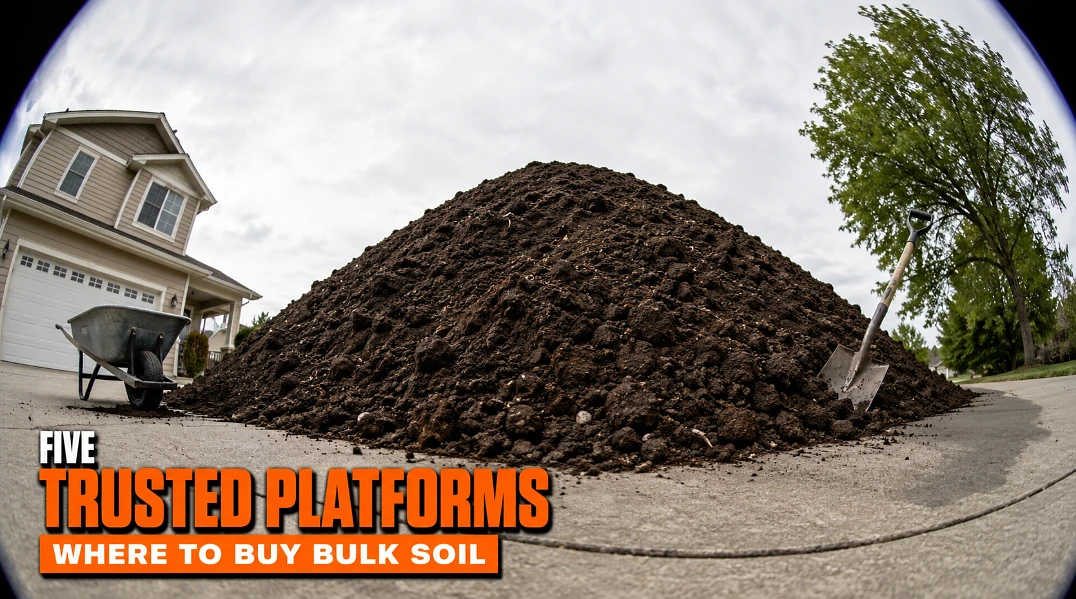
A cubic yard of topsoil weighs somewhere between 1,600 and 2,600 pounds depending on how wet it is.
That is worth sitting with before you order anything, because most people picture a tidy heap and get a ton of wet dirt dumped at the end of the driveway on a Saturday morning.
The good news is that bulk is far cheaper than bags once you pass a certain size, and the number where that flips is smaller than you would think.
1. Local Landscape Supply Yards
This is where most bulk soil in the country comes from, and it is usually the cheapest route.
These are the yards with the big bays of material and the loader, and their prices sit at the bottom of the range because you are buying without a middle layer. Around $20 to $40 a yard for screened topsoil in most parts of the country.
The real advantage is that they blend for the local ground. A yard in central Texas knows the clay problem and sells a mix with sand and compost in it. A yard in Florida is selling something different again, because the native soil there is sand and the problem is retention rather than drainage.
Two things to sort out on the phone. Ask what truck they are sending, because a ten wheeler needs a lot more room to tip than a small dump trailer, and ask whether they will dump on a driveway at all, since some will not risk cracking concrete with a loaded axle.
2. Buying Soil Online
Ordering online has become genuinely practical for garden quantities, and it solves a specific problem, which is that most people have no idea which local yard sells what.
You can buy soil online and see the blends listed with what is in them, which beats ringing round three yards asking somebody to describe a pile over the phone.
Where it earns its place:
- You can read the composition before ordering, so a raised bed mix that is topsoil, compost and something for drainage is described as exactly that
- Quantities are set out clearly, which matters because working out yards from a phone quote is where people go wrong
- It is the sensible route for smaller jobs, since a couple of raised beds does not need a ten yard truck
Work out your volume before you open any website. Ordering short means paying a second delivery fee, and ordering long leaves a pile in the garden that you will still be moving in August.
3. Home Improvement Retailers
Worth knowing what these are good for, because it is narrow but real.
They are expensive per yard and they are the answer when a truck physically cannot get to your garden. Terraced house, shared driveway, garden behind a locked side gate. In those situations bags are not a compromise, they are the only option.
Some will also deliver a pallet of bags, which is a middle ground people forget about. You get the volume without a dump truck, and everything arrives in units one person can carry.
For containers, planters and a single raised bed, bags are simply easier to handle and there is nothing wrong with that.
4. Specialist Soil and Compost Suppliers
These are the ones to call when the plants matter more than the price.
A compost yard or a specialist blender sells things a general landscape yard does not stock. Mushroom compost, leaf mould, worm castings, a mix built for blueberries that needs to sit acid.
They cost more per yard and they are worth it in one situation, which is when you are filling beds you intend to grow food in for the next ten years. A cheap fill in those beds is a decision you keep paying for every season.
Ask about the source of the compost too. Municipal green waste compost is fine and cheap, but if it has come off farmland there is a small risk of herbicide carryover, which will quietly stunt tomatoes and beans and take a year to work out.
5. Local Nurseries
Easy to overlook, since most do not advertise delivery anywhere on their website, and plenty of them do it anyway.
Ring and ask.
What you get from a nursery that you do not get from a materials yard is somebody who knows the plants. You can walk in with a photo of your garden, say what you are planting and what the drainage is like, and get pointed at the right mix rather than the most expensive one.
They tend to run smaller trucks or trailers as well, which is useful for a tight driveway, and their minimums are often lower than a landscape yard’s.
Bags or Bulk: The Line Sits at About 2 Cubic Yards
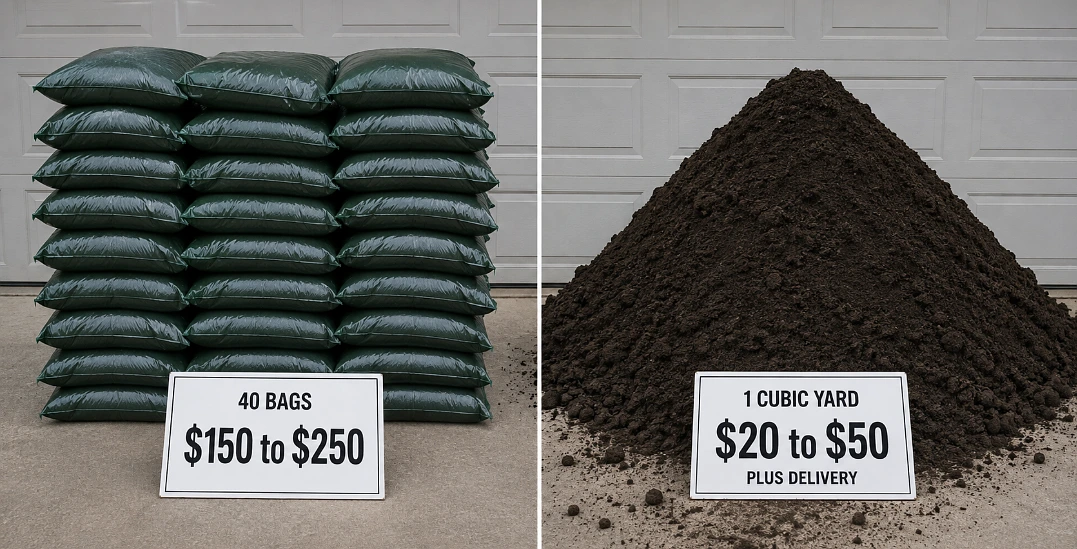
Bulk topsoil runs $20 to $50 per cubic yard, plus $50 to $150 for delivery.
Bagged topsoil at a big box store costs $3 to $6 a bag, and it takes 27 to 54 bags to make one cubic yard depending on bag size, so you are paying somewhere around $150 to $250 per yard for the same material.
That is three to six times the price.
Under about 1.5 to 2 cubic yards, bags usually win, because bulk suppliers have minimums and a small load surcharge eats the saving.
Over 2 yards, bulk wins every time, even after the delivery fee. On a five yard job the gap is a few hundred dollars.
What to Ask Any Supplier Before You Order
Price per yard is the least useful number on the quote. These are the ones that change what you pay.
- The delivery minimum. Many yards will not run a truck for less than 2 to 3 yards, and some fill dirt suppliers want 6 to 10.
- The small load surcharge, usually $30 to $100 if you order below the minimum.
- The distance limit. Most quotes assume 15 to 20 miles, then add $1 to $10 per mile or a flat surcharge beyond it.
- Screened or unscreened. Screened has been run through a mesh to take out rocks, roots and clumps. Unscreened is cheaper and you will be picking stones out of it for a year.
- What the soil is for. Topsoil, garden soil, compost and fill dirt are four different products, and the one that works for levelling a low spot will not grow vegetables.
Working Out How Much You Need
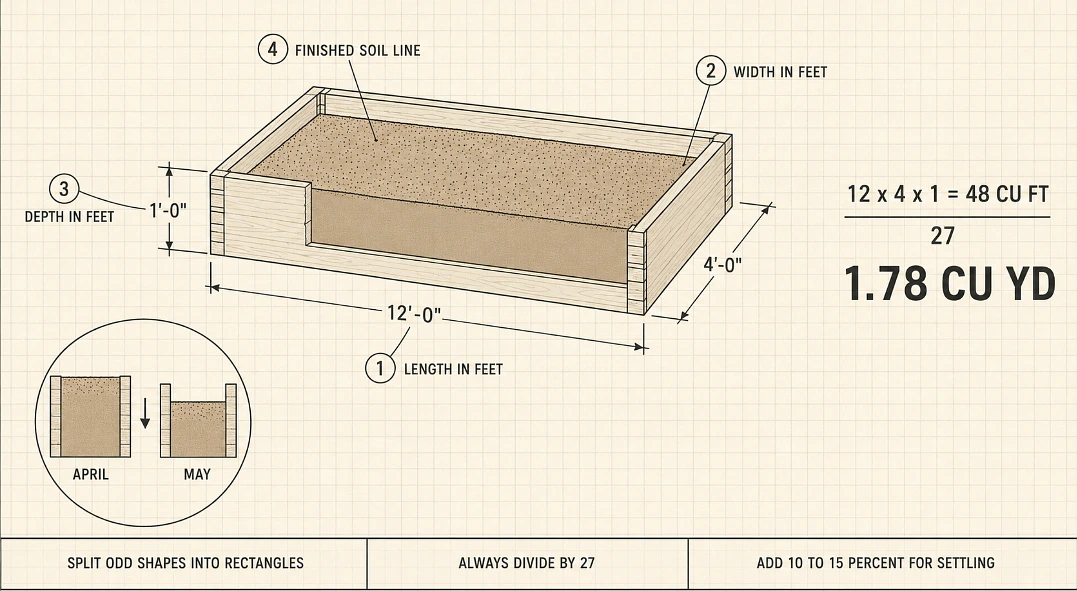
Length times width times depth in feet, then divide by 27.
A bed 12 feet by 4 feet, filled a foot deep, comes to 1.78 cubic yards. For an odd shape, split it into rectangles and add them up.
Then add about 10 to 15 percent, because soil settles once it is watered in and a bed that looked full in April sinks by May.
Before the Truck Turns Up
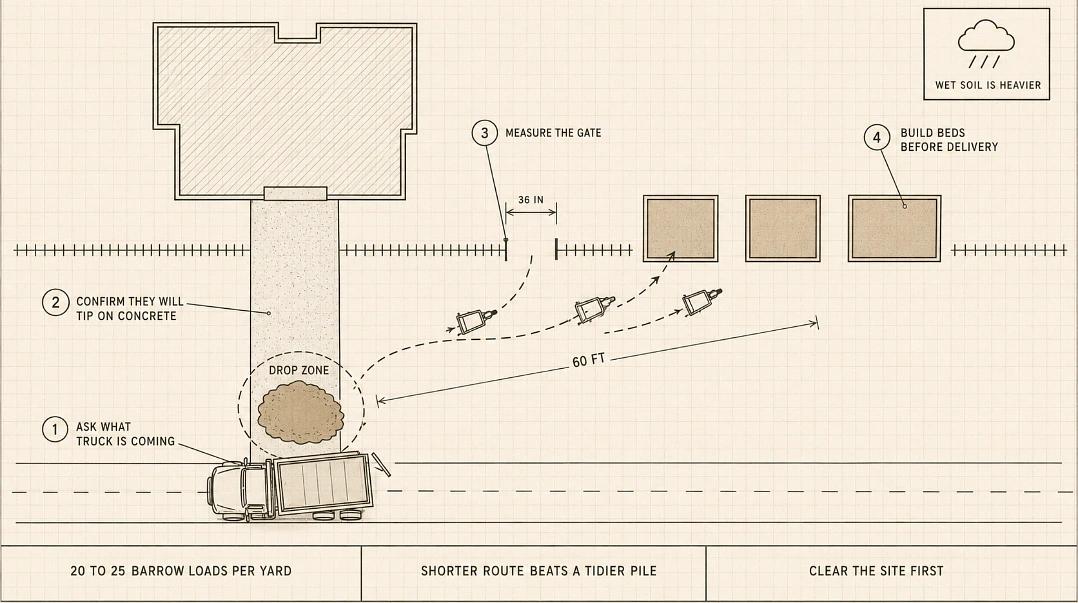
Pick the drop spot and know how far you are barrowing it. Every yard of topsoil is around 20 to 25 wheelbarrow loads, so ten feet closer to the beds is worth a lot on a hot day.
Measure the gate and the driveway. Ask the supplier what truck is coming and whether the driver can reach where you want it.
Watch the forecast. Wet soil is heavier, stickier, and turns a driveway into a mess that then needs pressure washing.
And have the beds built and the site cleared before it arrives, because a pile you can move straight into place is a completely different weekend from a pile you have to shift twice.
Soil sitting on a driveway is on a clock. No one plans for that part, and it is the part that decides whether the job takes a morning or a fortnight.

 Decor & Improvement Accessories