

Home & Decor Blogs: DIY, Interior Design & Lifestyle Ideas
Five Spring Checks That Stop the Most Common AC Failures in Duncan
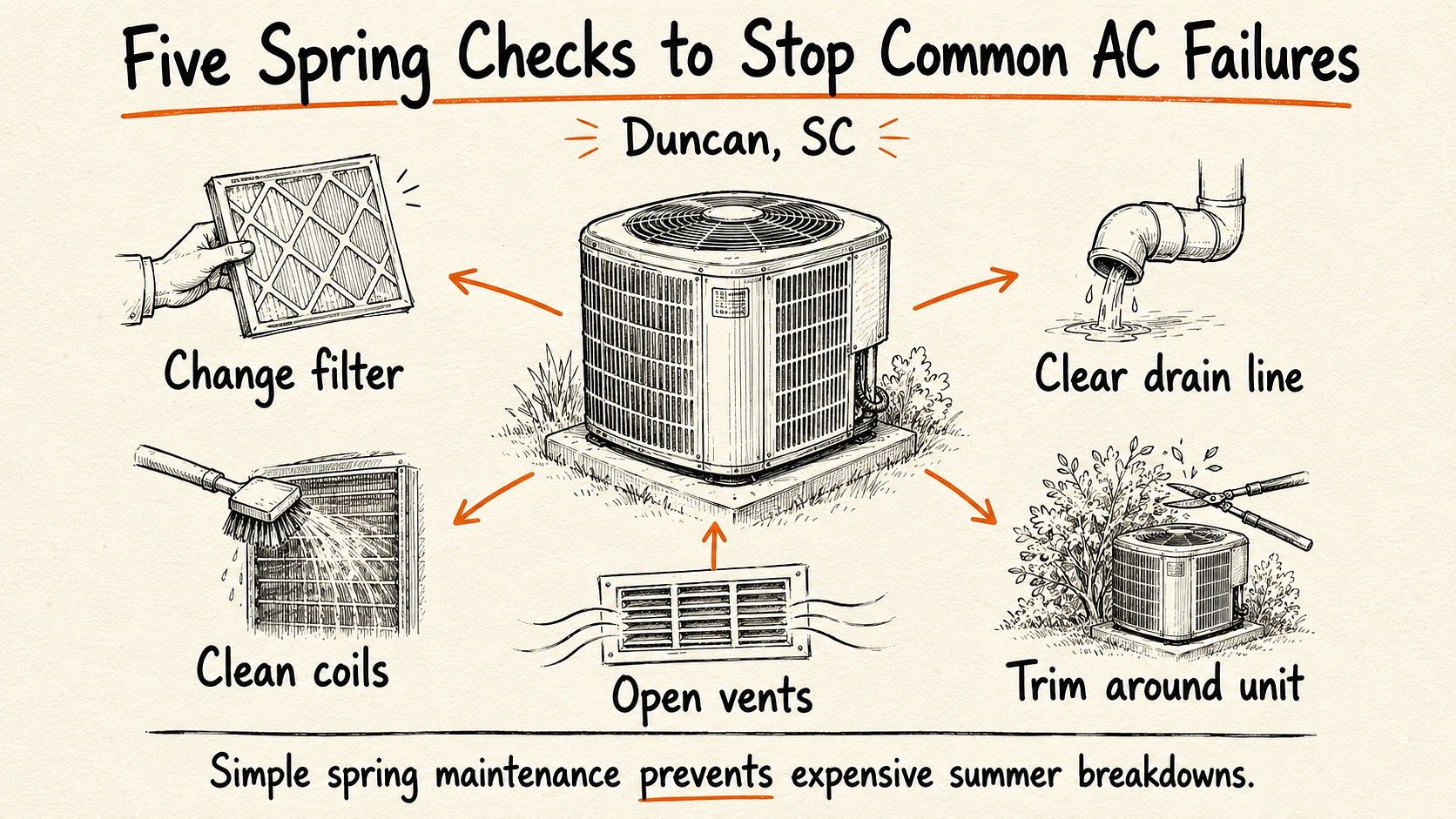
An emergency AC service call runs $150 to $600, depending on what broke and when it broke — after-hours and weekends push that toward $200 an hour or more. A spring maintenance visit costs $75 to $150. And the five checks below cost less than ten dollars total if you do them yourself in about an hour.
Duncan sits in upstate South Carolina where July highs average around 89°F and regularly push into the low 90s, humidity stays around 67% even in the driest summer months, and the system runs hard from May straight through September. That is five months of continuous load on equipment that most people do not think about until it stops working on the hottest day of the year.
Here is what actually fails first and what would have prevented it.
1. The Filter Is the Cheapest Part That Causes the Most Expensive Problem
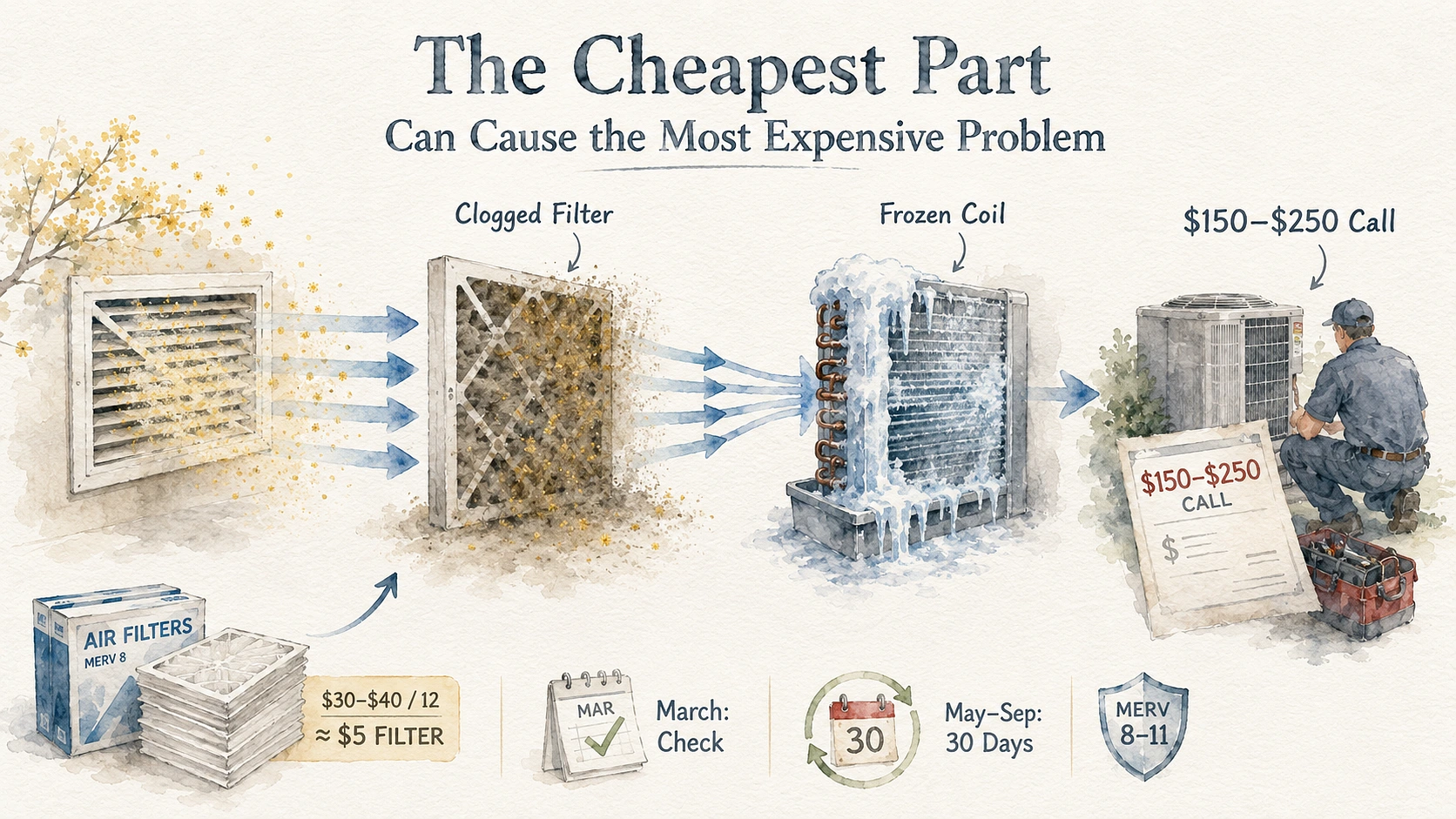
A clogged filter restricts airflow across the evaporator coil. When airflow drops, the coil temperature drops below freezing and ice builds on the surface. The system keeps running, the ice keeps building, and eventually you have a frozen coil that cannot cool anything. You call a technician, they come out, they tell you the coil needs to defrost for a few hours, they check the filter and find it packed solid with dust. That is a $150 to $250 service call for something a $5 filter would have prevented.
In Duncan specifically, pollen season runs heavy through March and April — and that pollen gets pulled straight through the return air intake. By May, a filter that was clean in February is already loaded.
What to do:
- Check the filter the first week of March, before cooling season starts.
- Check it again every thirty days from May through September. Every two weeks if you have pets or if there is construction nearby.
- Hold it up to light. If you cannot see light through it, replace it.
- MERV 8 to MERV 11 is the right range for most residential systems. Higher than MERV 13 and you start restricting airflow on equipment that was not designed for that resistance, which creates the same problem a dirty filter does.
A twelve-pack of MERV 8 filters runs about $30 to $40. That is less than $4 per filter, swapped out in under two minutes
2. The Condensate Drain Clogs Every Summer in This Climate
This is the one that catches people because it is not dramatic until it is. Your AC pulls moisture out of the indoor air as it cools — that moisture collects on the evaporator coil, drips into a drain pan, and exits the house through a small PVC pipe. In a dry climate, the line stays mostly clear. In upstate South Carolina with 67% average humidity and months of continuous cooling, that drain line grows algae inside it all summer long.
The algae thickens, the line narrows, water backs up into the drain pan, and one of two things happens. If there is a float switch, the system shuts itself off and you come home to a warm house. If there is no float switch — and plenty of older Duncan homes do not have one — the pan overflows and water drips into whatever is below the air handler. Could be drywall, could be insulation, could be a ceiling. By the time you notice the stain, the damage is already done.
What to do:
- Find the PVC drain pipe where it exits the house, usually near the outdoor unit or through an exterior wall close to the air handler.
- Pour a quarter cup of white vinegar or a cap of bleach into the drain access point near the air handler every two to three months during the cooling season.
- Check that the pipe is actually dripping when the AC is running. If the system has been on for an hour and nothing is coming out, the line is likely blocked.
- A wet-dry vacuum on the outdoor end of the drain pipe pulls out most clogs in a couple of minutes.
If the line is completely blocked and the pan has already overflowed, that is when you are looking at AC Repair in Duncan, SC — not just for the drain but potentially for water damage to the air handler cabinet and surrounding materials. The drain check takes sixty seconds. The repair call after ignoring it does not.
3. Dirty Coils Make the System Run Longer on Every Cycle
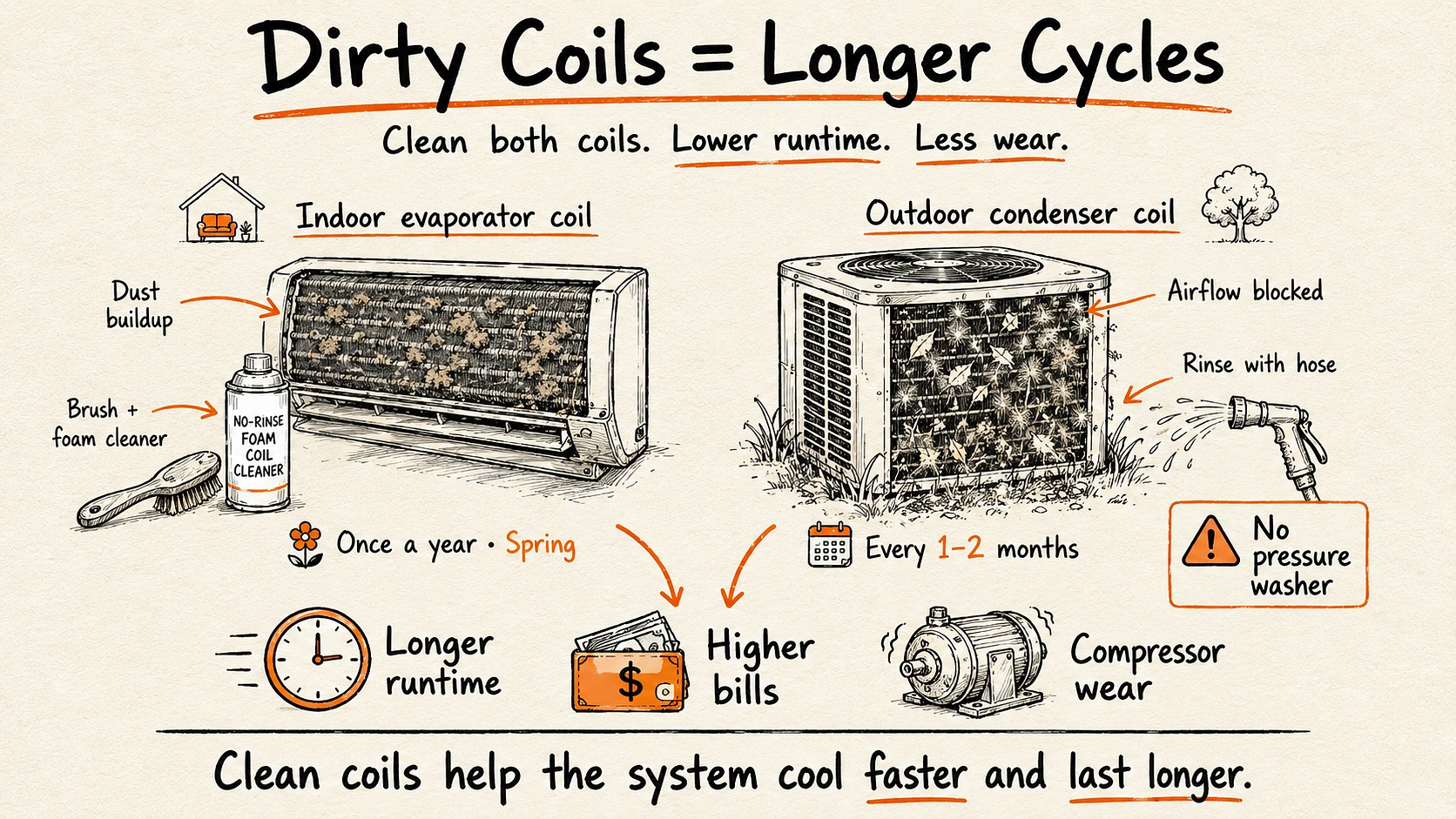
Two coils, two different problems.
The indoor evaporator coil collects dust from return air that gets past the filter — finer particles that the filter does not catch build up on the coil surface over months and years. That layer of dust insulates the coil from the air passing over it, which reduces heat transfer and makes the system run longer cycles to reach the thermostat setpoint. Longer cycles mean higher electricity bills and more wear on the compressor.
- A soft brush removes loose surface dust without bending the fins.
- Foam no-rinse coil cleaner (available at any hardware store for $8 to $12) dissolves the greasy buildup that brushing misses. You spray it on, it foams, it drips into the drain pan.
- Do this once a year, ideally in March or April before you turn the system on for summer.
The outdoor condenser coil takes different punishment. Duncan gets dusty during dry stretches, and grass clippings from mowing pile up against the unit fast. Cottonwood fluff and pollen stick to the fins and reduce airflow through the condenser. When condenser airflow drops, the compressor works harder to reject heat and runs hotter. A compressor running consistently above its design temperature fails sooner, and compressor replacement runs $1,500 to $3,000 or more once you add the part, labor, and refrigerant recharge together.
- Rinse the outdoor coil with a garden hose from the inside out. Not a pressure washer — that bends the fins.
- Do this every month or two during heavy cooling season, and always after mowing near the unit.
4. Blocked Vents Create Pressure Problems You Cannot See
This one is quick. Every supply register in the house should be open and unobstructed before cooling season starts. Furniture sitting on top of floor vents, rugs covering baseboard registers, closed dampers in rooms nobody uses — all of these restrict airflow and create back pressure in the duct system.
That back pressure does not just make one room warm. It makes the blower motor work harder across the entire system and can push air out through duct leaks in the attic instead of through the registers. The Department of Energy estimates leaky ductwork already wastes 20 to 30 percent of conditioned air in a typical home — adding back pressure from blocked vents makes that worse.
Walk through the house, open every register, pull furniture away from vents. Takes five minutes.
5. The Outdoor Unit Needs Two Feet of Clear Space
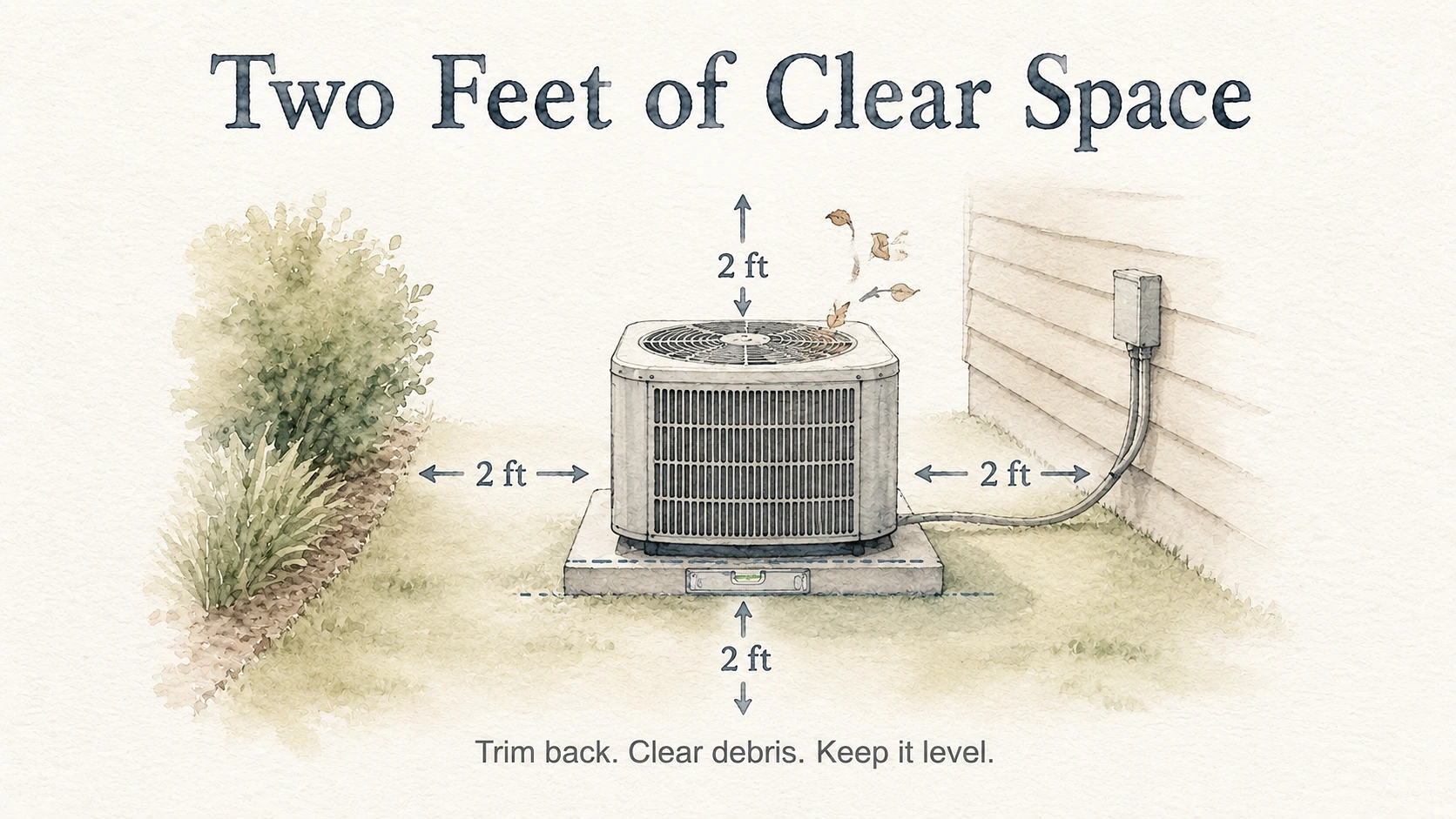
Grass grows fast in South Carolina from April onward and it grows right up against the condenser if nobody stops it. Bushes planted for aesthetics crowd in over the years. Leaves accumulate on top of the unit and fall through the fan grille into the cabinet.
- Trim everything back to at least two feet of clearance on all sides.
- Clear debris from the top of the unit — leaves sitting inside the fan housing block airflow and can interfere with the fan blade.
- Make sure the unit sits level. Settling ground or root growth can tilt the pad over time, which stresses refrigerant line connections.
Mark the first week of April on your calendar for this one. It takes fifteen minutes with hand shears and a hose.
The pattern with all five of these is the same — small neglect compounds into expensive failure, and the expense is always worse in the middle of a South Carolina summer when every HVAC technician in the upstate is booked solid. An emergency call during a July heat wave does not just cost more because of after-hours rates, it costs more because you are waiting in a queue while your house sits at 90 degrees. The hour you spend on these checks in March or April buys you out of that situation entirely.

 Decor & Improvement Accessories