

Home & Decor Blogs: DIY, Interior Design & Lifestyle Ideas
Why Your AC Bill Spikes Every Summer in Maryland and What You Can Actually Fix
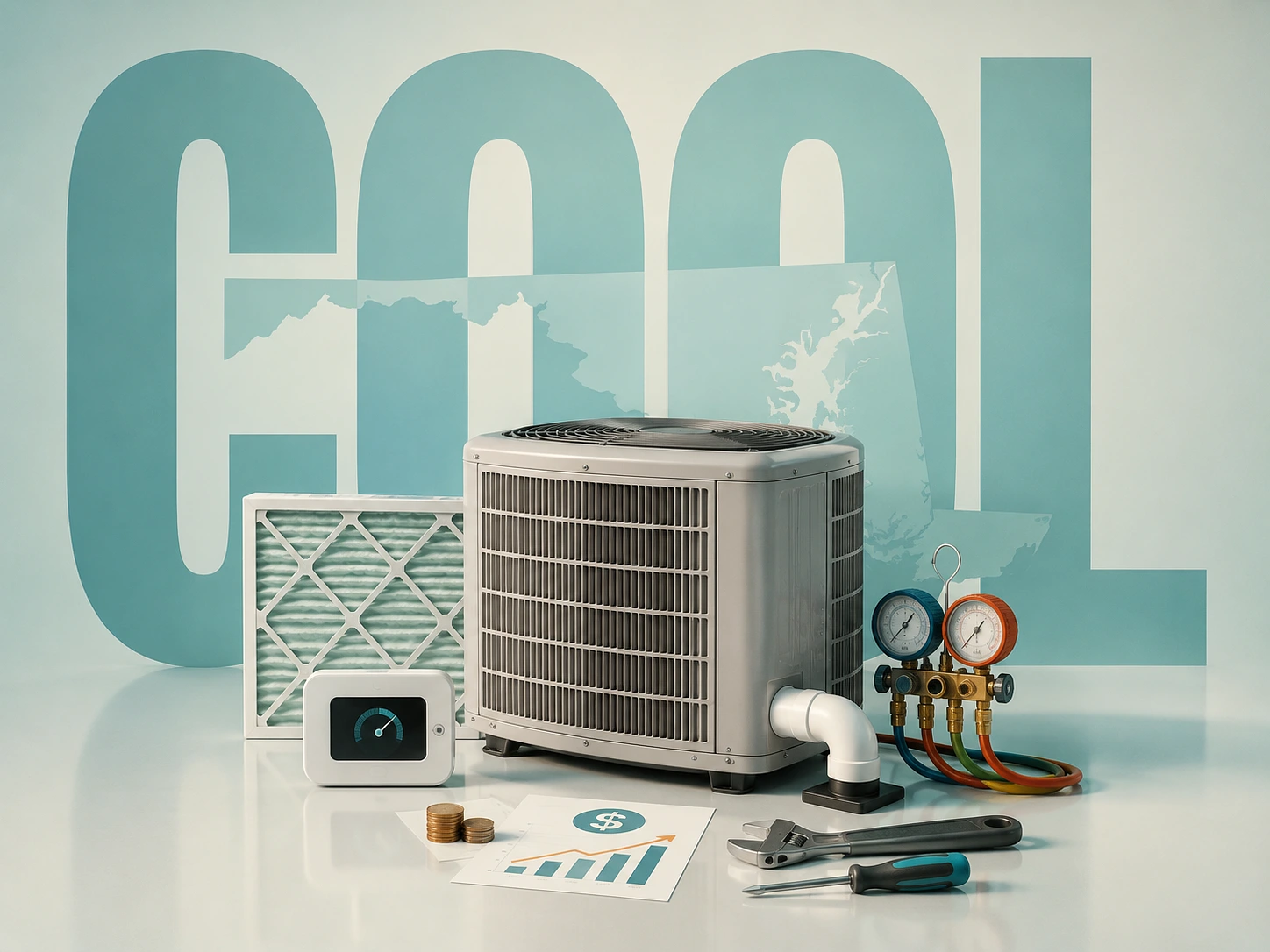
Maryland electricity sits at about twenty cents per kWh right now, higher than the national average of around seventeen and a half cents. The typical household here uses somewhere around 930 to 940 kWh a month which puts the average bill in the hundred sixty-five to hundred eighty dollar range, but that number moves fast once summer hits because your AC is not just cooling the air in the Annapolis area, it’s pulling moisture out of it at the same time and it does that nonstop from about June through September.
Most of the spike comes down to five things. Some you can sort out yourself in ten minutes. Others need someone with a licence and a refrigerant gauge.
What Actually Needs a Technician
If there are no leaks in the filter, the drain, the condenser fins, the thermostat, and yet the bill is still high or the cooling is still weak, the problem is one of three things.
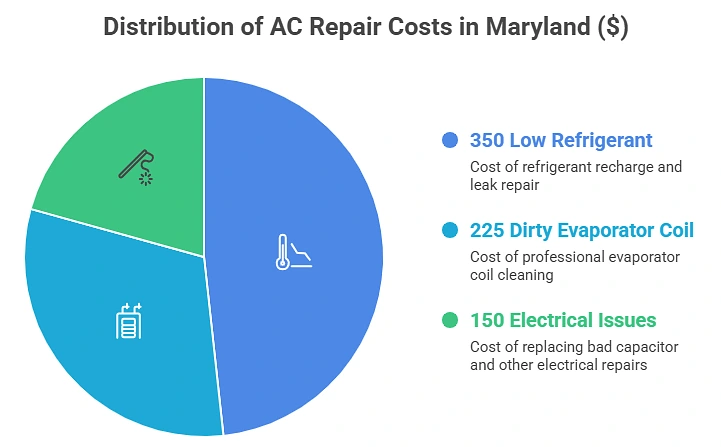
The first one is low refrigerant, and the second one is that it will cost you double if it is handled incorrectly. The way your system works, it pulls heat from the inside air and releases it outdoors; if it has a leak and the refrigerant level gets low, there is only so much it can pull the heat from the inside air, no matter how long it runs. Warm air can be felt coming from the vents, or refrigerant lines near the outside unit, or both are beginning to frost over. A recharge in the Maryland area runs roughly 200$ to 500$, but here’s the thing: if nobody finds and fixes the actual leak first, the refrigerant bleeds out again, and you are paying for another recharge in a few months. Leak detection and line repair add another two hundred to five hundred on top.
Dirty evaporator coil is the second. You can rinse the outdoor condenser yourself but the evaporator sits inside the air handler and you need a technician to pull it out, clean it, and inspect it properly. When grime builds up on that coil heat transfer drops and the system eats more electricity trying to do the same job. A professional cleaning runs about a hundred fifty to three hundred dollars depending on how badly things are caked up.
Then there are electrical issues, and these are the invisible ones. A worn contactor, a failing capacitor, loose connections, a blower motor pulling too much current — any of these make the system run inefficiently, and some of them are safety hazards. A bad capacitor is probably the single most common AC failure out there and it usually runs seventy-five to two hundred fifty dollars to replace, including labour. A failing compressor is where it gets expensive, fifteen hundred to twenty-five hundred for the part alone before labour, and at that price a lot of people start asking whether it makes more sense to just replace the whole system.
Overall AC repair in Maryland falls between about a hundred fifty and six hundred fifty dollars for most common fixes. Technician labour rates around here run seventy-five to a hundred fifty per hour. For homeowners in the Annapolis area, Grove Heating & Cooling handles both the diagnostic side and the repair work — always worth getting their quote alongside at least one other contractor though, so you are comparing what is actually included in the scope and not just the number at the bottom of the page.
Why Annapolis Summers Are Harder on AC Than Most People Realise
This is the part that separates living here from somewhere like Phoenix or Denver. Dry heat is simpler on equipment because the system only has to cool the air and that is it. In Annapolis the average humidity sits around 64% across the year and peaks near 69% in August which means your AC is cooling and dehumidifying simultaneously for four to five months without a break.
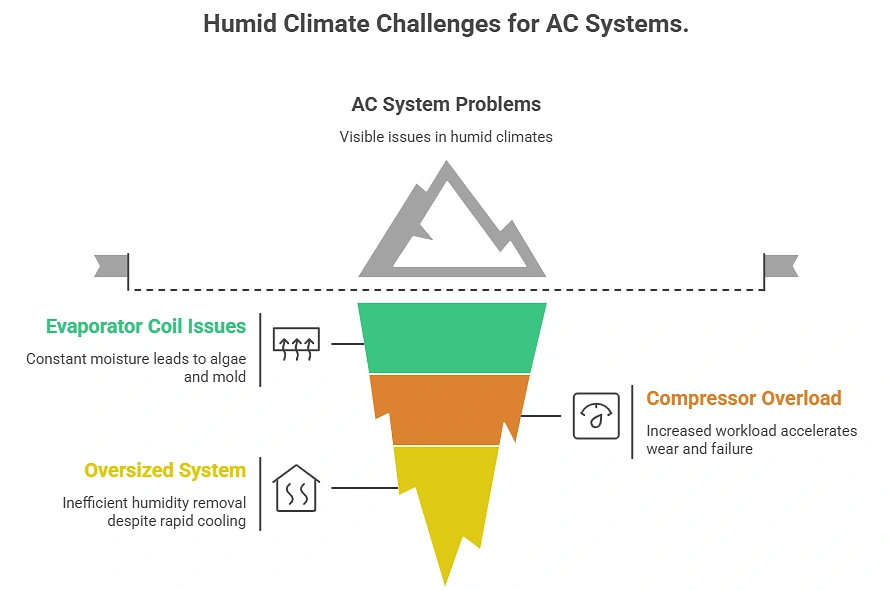
That dual load creates three specific problems and they kind of stack on top of each other.
The evaporator coil stays wet constantly. This is the dehumidification process – moisture will condense on the cold coil surface and fall into the pan below, and after months of it being damp all the time, algae and mould will occur in the drain system. One of the most frequent summer service calls in humid climates, and one of the easiest and cheapest to prevent if you keep up with it is a clogged condensate drain.
When a compressor removes moisture from air, it requires energy in addition to that needed for cooling, thus increasing the work load for the compressor. It runs longer cycles, more of them, and that accelerates wear. Compressor failure is the repair that tips most homeowners into the replacement conversation because the part alone costs more than what a basic repair would run on a system that is still in decent shape otherwise.
And here is the one that catches people off guard — if the system is oversized for the house, and this is more common than you would think especially in older Annapolis homes, it cools the air fast, hits the thermostat setpoint, shuts off, but the cycle was too short to actually pull the humidity out. The house reaches 72 degrees but it feels clammy and damp. So you drop the thermostat to 68 to try to compensate, the system runs even more, and the bill climbs higher while the house still does not feel right. A properly sized system running at the right capacity handles temperature and humidity together. An oversized one handles temperature fast and humidity basically never.
What You Can Check Before You Pick Up the Phone
These cost nothing or close to nothing and they fix the problem outright more often than you would think.
- Start with the air filter. A clogged filter chokes airflow to the evaporator coil, the coil temperature drops too low, ice starts forming on the surface and now your AC is running but barely cooling anything. The compressor keeps grinding away, your electricity bill reflects every minute of it, and the whole time the fix was a three to fifteen dollar filter swap. In Annapolis summers you should be checking it monthly from May through September, every two weeks if you have pets or there is construction happening nearby.
- Then look at the condensate drain. There is a PVC pipe coming out of your indoor air handler and when the system is working hard it should be dripping water outside. If it’s dry the line is probably blocked. Annapolis gets around 44 to 45 inches of rain a year and summer humidity regularly sits above 65% so the evaporator coil stays wet for months straight, algae grows inside the drain pan and the condensate line, the line clogs, water backs up and the system either trips a safety float switch and shuts down or if there is no float switch it overflows the pan and damages whatever is underneath. A quarter cup of bleach into the drain pan every couple of months kills the algae before any of that happens. Thirty seconds of work.
- Take a walk and check on the condenser. Dust, leaves, or cottonwood fluff in the aluminium fins on the outside compressor unit reduces airflow, and the compressor must operate more cycles to achieve the same cooling effect. The longer the cycle, the more electricity is used and the faster the compressor wears out – the most expensive component of the entire system. Use a garden hose to rinse the fins from the inside out, but don’t use a pressure washer, and avoid getting within two feet of the unit on any side.
- Also examine the thermostat. Easy to overlook but if it is off by two or three degrees, the system runs too long or short-cycles, on and off, and this wastes electricity. Install a separate thermometer at the same level as the thermostat and check. When they don’t match within 2 degrees, it is time to recalibrate or change your thermostat.
Why Annapolis Summers Are Harder on AC Than Most People Realise
This is the part that separates living here from somewhere like Phoenix or Denver. Dry heat is simpler on equipment because the system only has to cool the air and that is it. In Annapolis the average humidity sits around 64% across the year and peaks near 69% in August which means your AC is cooling and dehumidifying simultaneously for four to five months without a break.
That dual load creates three specific problems and they kind of stack on top of each other.
The evaporator coil stays wet constantly. This is the dehumidification process – moisture will condense on the cold coil surface and fall into the pan below, and after months of it being damp all the time, algae and mould will occur in the drain system. One of the most frequent summer service calls in humid climates, and one of the easiest and cheapest to prevent if you keep up with it is a clogged condensate drain.
When a compressor removes moisture from air, it requires energy in addition to that needed for cooling, thus increasing the work load for the compressor. It runs longer cycles, more of them, and that accelerates wear. Compressor failure is the repair that tips most homeowners into the replacement conversation because the part alone costs more than what a basic repair would run on a system that is still in decent shape otherwise.
And here is the one that catches people off guard — if the system is oversized for the house, and this is more common than you would think especially in older Annapolis homes, it cools the air fast, hits the thermostat setpoint, shuts off, but the cycle was too short to actually pull the humidity out. The house reaches 72 degrees but it feels clammy and damp. So you drop the thermostat to 68 to try to compensate, the system runs even more, and the bill climbs higher while the house still does not feel right. A properly sized system running at the right capacity handles temperature and humidity together. An oversized one handles temperature fast and humidity basically never.
When Repair Stops Making Financial Sense
There is no exact age where your AC needs replacing but the math starts tilting once a few things line up at the same time.
If the system is past ten or twelve years old and still runs on R-22 refrigerant — that is, Freon, which was phased out and is now expensive to source, sometimes three to five times what modern R-410A costs per recharge — then every repair is going into equipment that is both aging and increasingly costly to maintain. If the compressor has failed or is on its way out and the quote comes in at fifteen hundred or more on a system that has already outlived its expected lifespan, that money is probably better put toward a new unit. And if you are calling for repairs two or three times a summer and the total is creeping toward what a year of payments on a new system would cost, that pattern is telling you something.
Full replacement in Maryland averages roughly four thousand to eight thousand dollars, depending on unit type, size, SEER2 rating, and whether the ductwork needs work. The federal minimum efficiency for new residential AC in this region is 14.3 SEER2. ENERGY STAR certification starts at 15.2 SEER2. Variable-speed units run 18 to 20+ SEER2, they cost more upfront but use noticeably less electricity across a summer, and when you are paying twenty cents per kWh that efficiency gap adds up faster than it would somewhere with cheaper power.
One thing that gets skipped in almost every replacement conversation — If the ductwork is leaky a brand new high efficiency unit is blowing conditioned air through the same leaky ductwork, and not blowing the promised conditioned air. Leaky ducts are estimated to leak 20 to 30 percent of conditioned air in the average residence by the Department of Energy. A Maryland summer bill of say, a hundred and sixty dollars a month, is thirty to fifty dollars going up the attic and doing nothing useful. Duct sealing can cost $1500-$3000 but, in an area where the AC is used 5 months a year at a heavy load, the payback occurs much quicker than most people think.
Quick Reference
- Clogged filter → DIY, $3–$15 for a replacement.
- Blocked condensate drain → DIY with a wet-dry vac on the outdoor end, or $75–$150 service call if you can not access it.
- Dirty condenser fins → DIY, garden hose, no cost.
- Thermostat off → DIY check, pro recalibration or swap runs $50–$250.
- Refrigerant leak → Pro only, $200–$500 recharge plus $200–$500 for leak repair.
- Evaporator coil cleaning → Pro only, $150–$300.
- Bad capacitor → Pro only, $75–$250 including labour.
- Compressor failure → Pro only, $1,500–$2,500 for the part plus labour, usually triggers replacement discussion.
- Full system replacement → $4,000–$8,000+ depending on unit and ductwork scope.
 Decor & Improvement Accessories