

Home & Decor Blogs: DIY, Interior Design & Lifestyle Ideas
How to Budget for a Bathroom Remodel

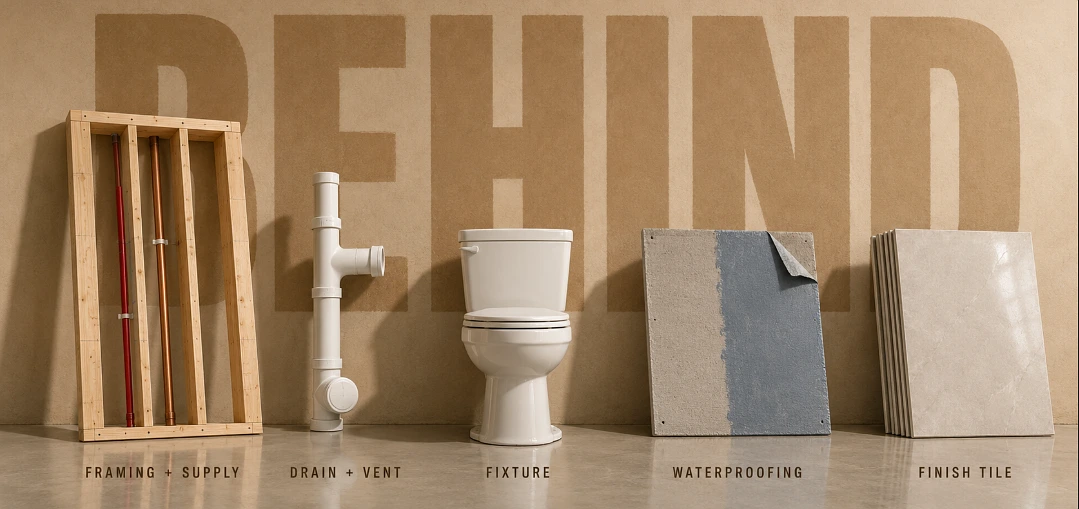
Move a toilet three feet and you have added a few thousand dollars before anyone picks a tile. That single decision moves the number more than anything else
If you are thinking about updating your bathroom, the price can swing from surprisingly manageable to wallet clenching fast.
It looks simple on paper. Swap a few fixtures, better tile, maybe more storage. Then plumbing lines enter the chat.
Most bathrooms land somewhere between $10,000 and $25,000 for a full remodel that keeps the layout. A cosmetic refresh starts around $3,000 to $7,000. A high end job with layout changes runs past $40,000.
That is a wide spread, and it is not really about square footage. It is about how much of the work happens behind the walls.
What Each Type of Bathroom Remodel Costs
Three tiers, and the jump between them is mostly labour rather than materials.
| The job | What it covers | Typical cost | Time |
|---|---|---|---|
| Cosmetic refresh | Paint, fixtures, mirror, lighting, hardware, vanity swap in place | $3,000 to $7,000 | 1 to 2 weeks |
| Full remodel, same layout | New vanity, toilet, flooring, tile, tub or shower replaced | $10,000 to $25,000 | 3 to 5 weeks |
| Major remodel | Layout changes, plumbing moved, custom tile, premium finishes | $40,000 and up | 6 to 10 weeks |
Add 2 to 6 weeks before any of that for material lead times. Custom vanities and specialty tile are running long right now.
Labour Takes 40 to 60 Percent of Your Budget
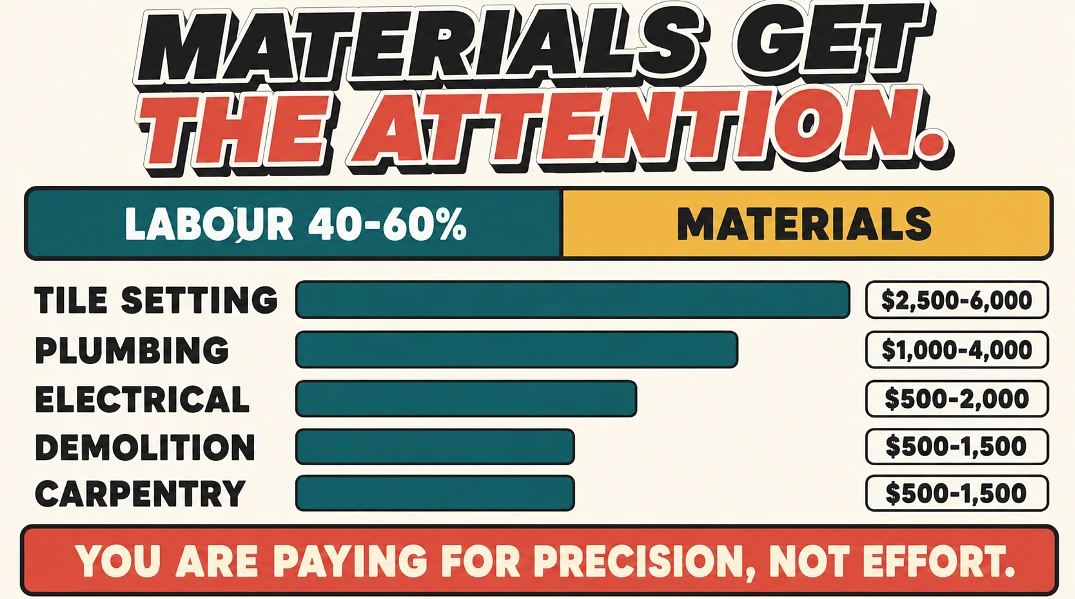
Materials get the attention. Labour quietly takes half the money.
Bathrooms are small, technical, and need several trades working in sequence. Plumber, electrician, tile setter, drywall, painter, installer.
You are paying for precision more than effort. A floor that is slightly out ruins tile alignment. A badly waterproofed shower creates expensive problems behind the walls you will not see for three years.
Where the labour money goes:
- Demolition, $500 to $1,500
- Plumbing work, $1,000 to $4,000
- Electrical, $500 to $2,000
- Tile installation, $2,500 to $6,000
- Carpentry, $500 to $1,500
Older homes cost more here, because crews often have to bring things up to code as they go. GFCI outlets, proper venting, new shutoff valves. Not glamorous. Not optional either.
Moving Plumbing Is the Single Biggest Cost Jump
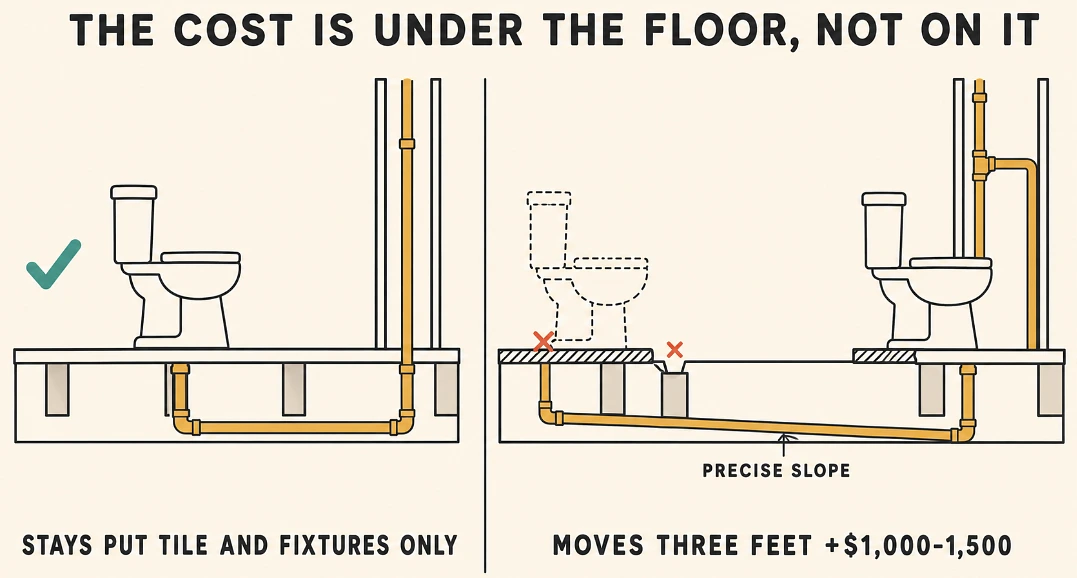
Keep the toilet, sink and shower where they are and you save thousands.
Relocating a fixture means opening floors and walls to reroute supply lines, drains and vent stacks. Moving a toilet to a new wall adds $1,000 to $1,500 on its own, since drains need precise slope.
Move several and rough plumbing alone can add $3,000 to $15,000.
Sometimes it is worth it. If the door swings into the vanity, or the shower is genuinely too small, no amount of new tile fixes that.
But ask first whether a better vanity, improved lighting and a curbless shower solve the real problem. They often do, for a fraction of the cost.
Where Materials Quietly Add Up
A faucet upgrade here, better tile there, a nicer vanity because the cheap one looked suspiciously cardboard adjacent. Suddenly your budget has developed trust issues.
Rough ranges to plan around:
- Vanity, $400 to $700 for a basic 30 inch unit with a top, far more for custom
- Toilet, $150 to $800
- Tile, from $1 per square foot for basic ceramic upward
- Exhaust fan with new ducting, $400 to $950
- Tub to shower conversion, $2,500 to $8,000
Spend where it gets wet. Porcelain tile over basic ceramic, quartz over natural stone for easy upkeep, a decent fan over a cheap one.
Save on the things you can swap later without opening a wall. Mirrors, hardware, light fittings, paint.
Hold Back 15 to 20 Percent for What You Find
About 30 percent of bathroom remodels uncover something behind the walls.
Rot, mould, a failing subfloor, or plumbing that was doing its best and had clearly given up emotionally.
Budget for the possibility:
- Water damage repair
- Mould remediation
- Subfloor replacement
- Corroded pipes
- Permits, $200 to $1,000
- Code upgrades and disposal fees
Older house, lean toward 20 percent. That cushion is what stops you making panicked cuts later, like skipping waterproofing to afford the vanity you already ordered.
Match the Budget to How the Bathroom Gets Used
Your budget should match how the room gets used, not somebody’s magazine spread.
Primary bathroom, spend on comfort, storage, ventilation and durable surfaces. Guest bath, spend less on custom work and more on easy upkeep. Family bathroom, durability and cleanability win.
Split your wish list three ways. Must have, nice to have, skip for now.
Heated floors are genuinely lovely. If your fan is weak and your shower waterproofing needs real attention, they can wait.
Compare Quotes Line by Line, Not by the Total
Comparing bids properly routinely saves 10 to 20 percent on labour.
One quote may include demolition, permits, disposal and finish installation. Another leaves three of those out and shows up cheaper.
Ask every bidder to separate materials from labour, and check:
- Project timeline
- Material allowances
- Waterproofing details
- Cleanup and disposal
- Warranty terms
- Who pulls the permits
The cheapest bid is rarely the best value. A detailed estimate usually means a more organised contractor, and in a bathroom that matters, because every delay pushes the next trade back.
What You Get Back at Resale
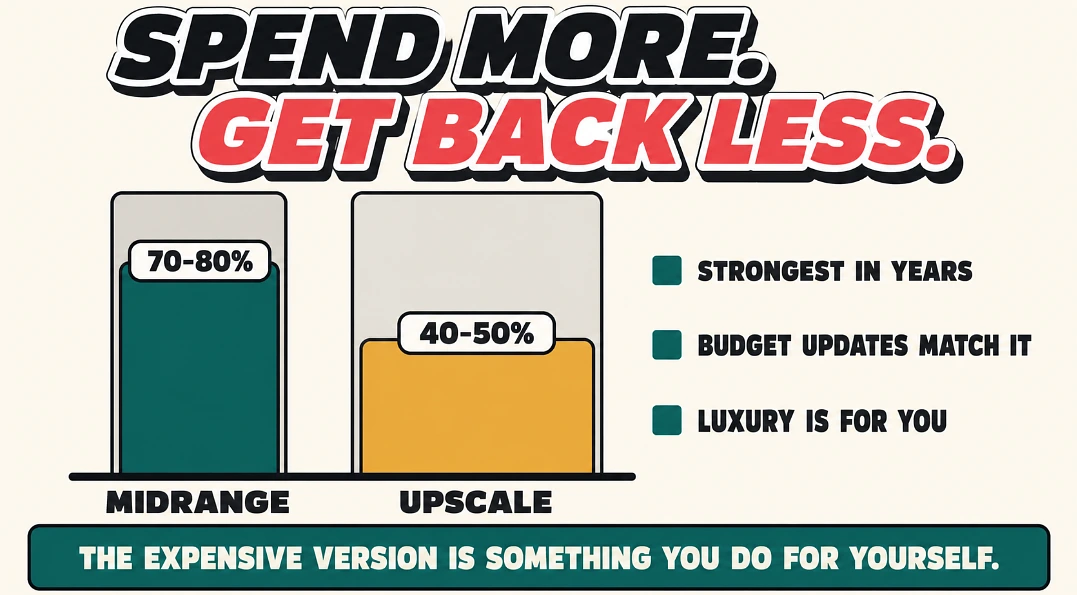
A mid range remodel returns roughly 70 to 80 percent at resale, which is the strongest return this category has seen in years.
Budget updates do about the same. Luxury renovations return 36 to 55 percent, so the expensive version is something you do for yourself rather than for the next owner.
If you want to sanity check your own numbers before calling anyone, run them against a published cost of a bathroom remodel breakdown and see where your plan sits.
Spend on Workmanship First, Finishes Second
The best budget is not the smallest number you can imagine. It is the one that covers solid work, practical materials, and the changes that improve how you live.
A bathroom gets used constantly, which makes cheap shortcuts unusually expensive later.
Function first, finishes second, trends somewhere behind both. Plan carefully, leave room for surprises, and you end up with a bathroom that works and keeps working.

 Decor & Improvement Accessories